
BeeBridge is a Food POAO Exporter of EU goods with 90-day trade financing for Japan & Taiwan Importers
Welcome to BeeBridge – Certified Exporters of European Food
EU Export Consolidation – France | Veterinary Certified (POAO) | Pallet-Based Dispatch
BeeBridge is a Food POAO Exporter of EU goods with 90-day trade financing for Japan & Taiwan Importers
At BeeBridge, we specialise in sourcing and exporting premium European Products of Animal Origin (POAO) and specialty foods from approved European producers. Our portfolio includes artisan butter, cheese, honey, meat, seafood and other high-value food products selected for their quality, provenance and commercial potential. Qualified importers benefit from structured trade finance, allowing businesses to purchase European food without traditional supplier prepayment while maintaining access to professionally managed export documentation, consolidation and regulatory compliance.
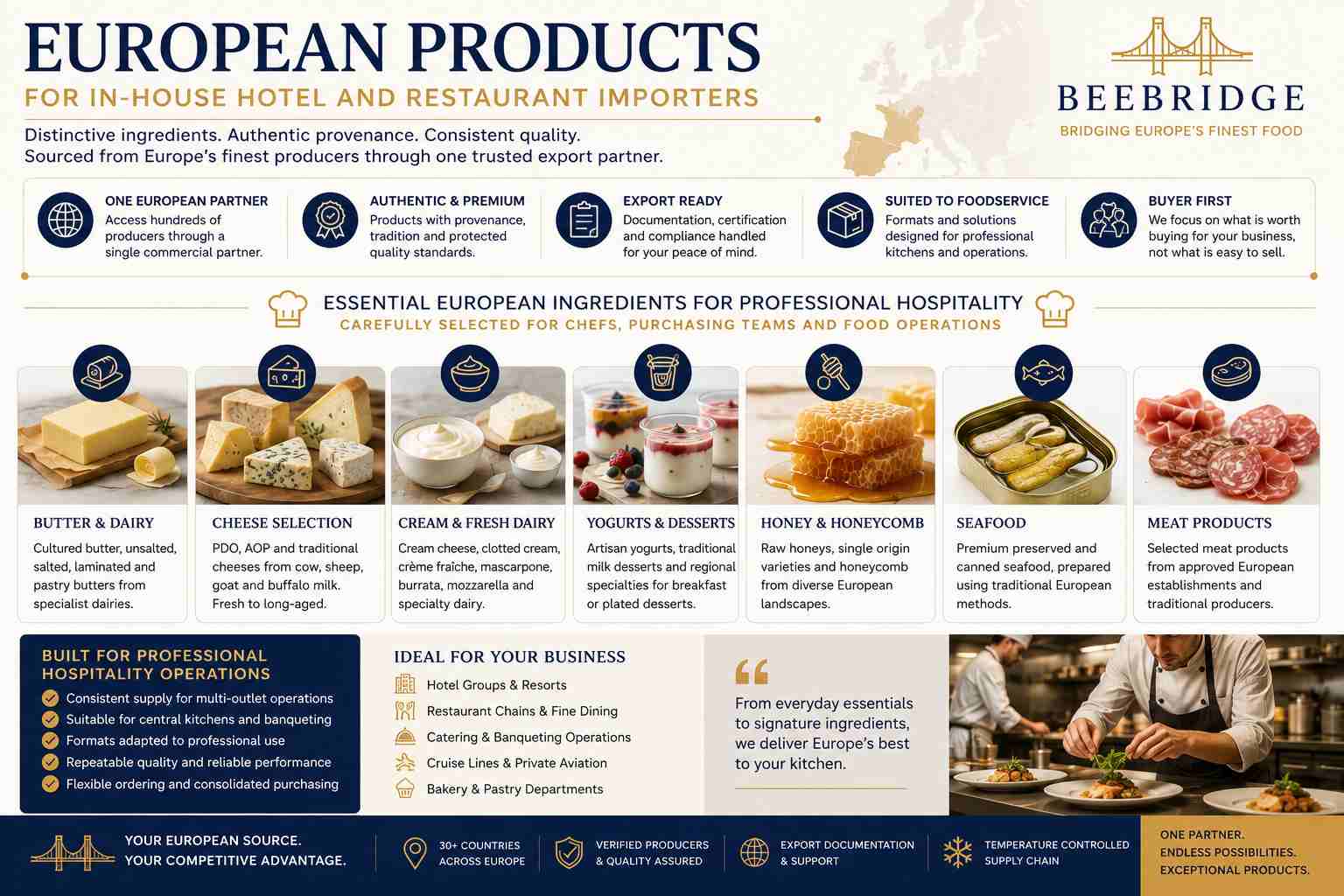
BeeBridge Trade Process
Every BeeBridge shipment begins long before a customer places an order.
Our procurement team continuously searches Europe for exceptional food producers capable of meeting the expectations of professional importers. These include artisan butter makers, AOP and PDO cheesemakers, traditional meat producers, seafood processors and hundreds of independent beekeepers producing some of Europe’s finest floral honeys.
Many of these producers are family businesses or specialist manufacturers. Although their products are exceptional, they often lack the resources, export knowledge or commercial infrastructure required to supply international markets directly. BeeBridge was created to bridge that gap.
Every potential supplier undergoes a structured commercial assessment covering product quality, food safety, certifications, production capability, reliability and export suitability. More producers are declined than approved, ensuring that only suppliers meeting BeeBridge’s commercial and quality standards become part of our European portfolio.
Once approved, BeeBridge completes the commercial and regulatory onboarding process. Product specifications, certifications, traceability, packaging information and export documentation are standardised and maintained before orders are ever placed, allowing future purchasing to proceed efficiently.
When an importer places an order, preparation begins with each supplying producer. Products are manufactured, allocated and prepared for dispatch according to the confirmed purchase order.
Where multiple suppliers are involved, shipments are delivered to BeeBridge’s European fulfilment partner, EBS Espérance in France. Here, products from across Europe are received into a single controlled facility where they can be inspected, consolidated, repacked where required, labelled and matched against export documentation before shipment. This additional quality control stage helps identify potential issues before goods leave Europe, reducing delays and improving shipment consistency.
Only after every commercial, regulatory and quality requirement has been completed are consignments released for international export.
BeeBridge Ltd. European Food Exporters
BeeBridge Ltd. is a European food export company specialising in premium Products of Animal Origin (POAO) and specialty foods sourced from approved producers throughout the European Union.
Rather than representing a single manufacturer, BeeBridge has built a carefully selected portfolio of artisan food producers, giving professional importers access to exceptional European butter, cheese, honey, meat, seafood and other specialty foods through one commercial relationship.
Our customers include importers, distributors, wholesalers, retailers, private-label operators and food manufacturers seeking reliable access to high-quality European food backed by structured purchasing, export compliance and commercial continuity.
From supplier approval and procurement to European consolidation and international shipment, BeeBridge has developed the commercial infrastructure required to transform Europe’s fragmented artisan food industry into a practical and reliable export supply network for professional buyers.
-
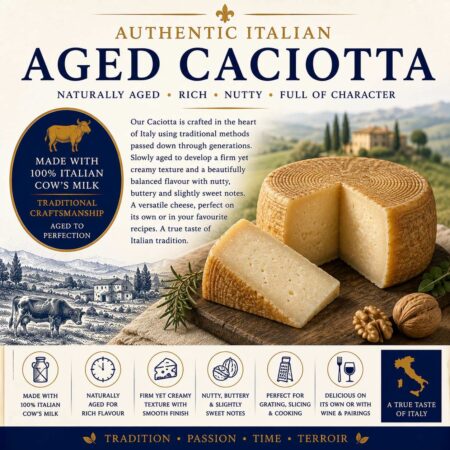
Aged caciotta (4)
-
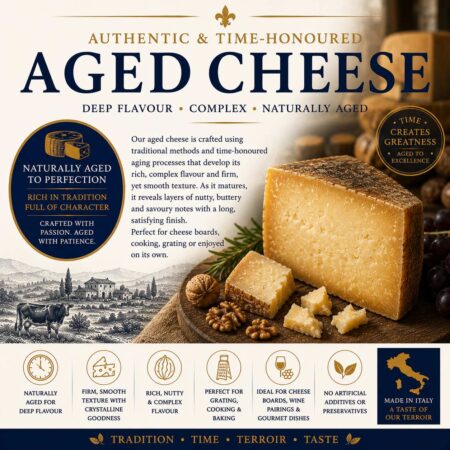
Aged cheese (117)
-
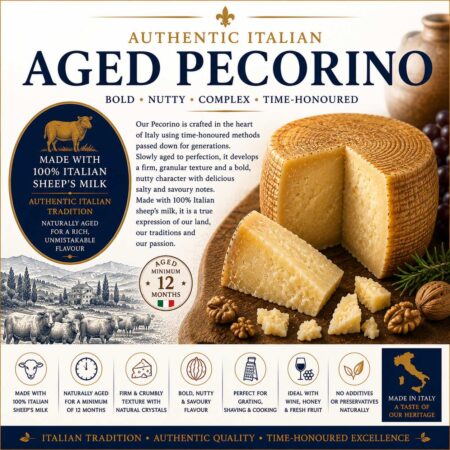
Aged pecorino (21)
-
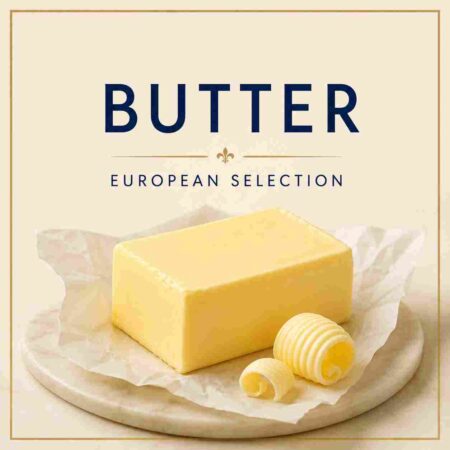
AOP Butter (1)
-
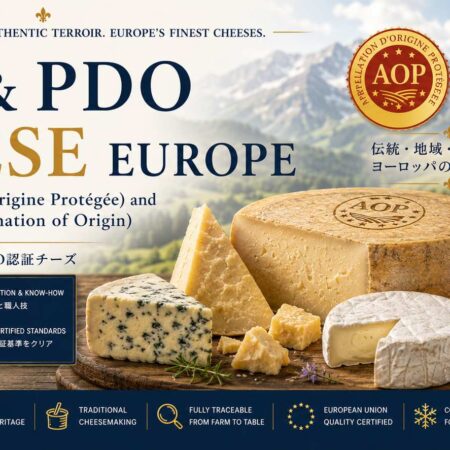
AOP Cheese (65)
-
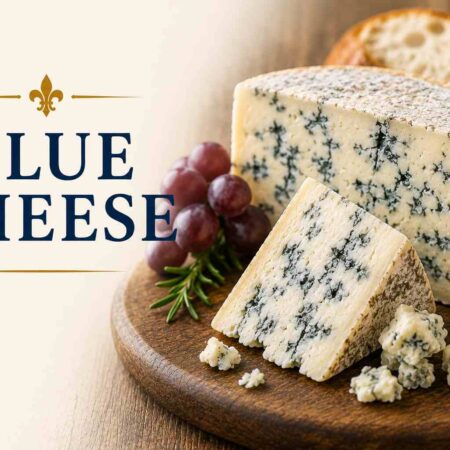
Blue Cheese (18)
-
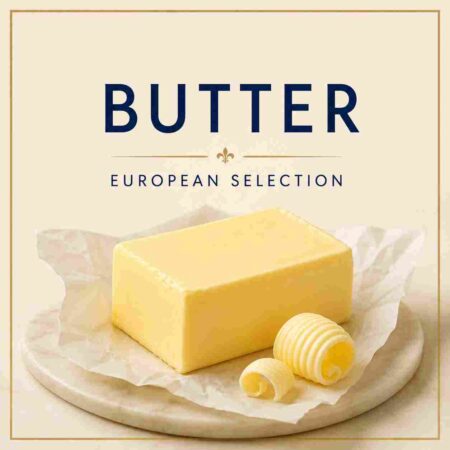
Butter (20)
-
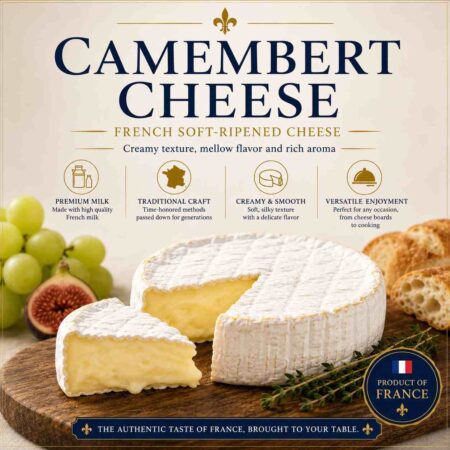
Camembert Cheese (3)
-
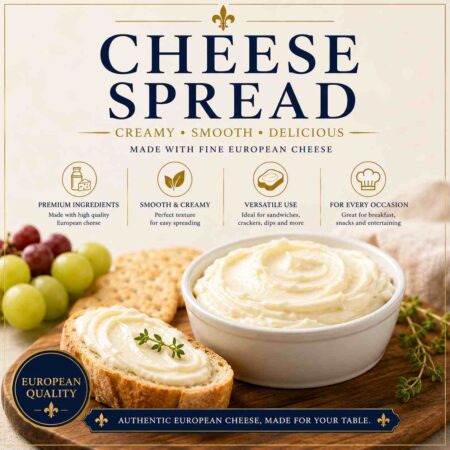
Cheese Spread (54)
-
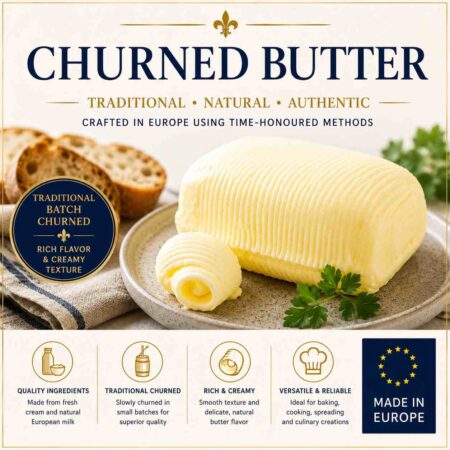
Churned Butter (2)
-
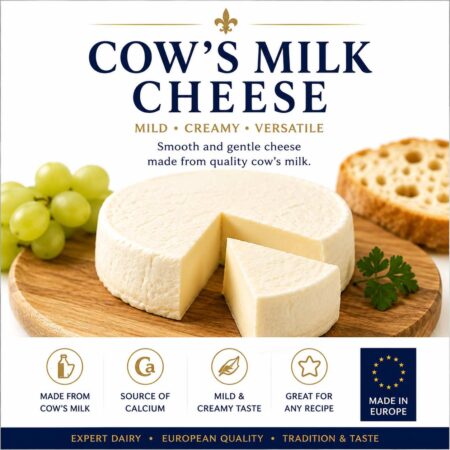
Cow milk Cheese (111)
-
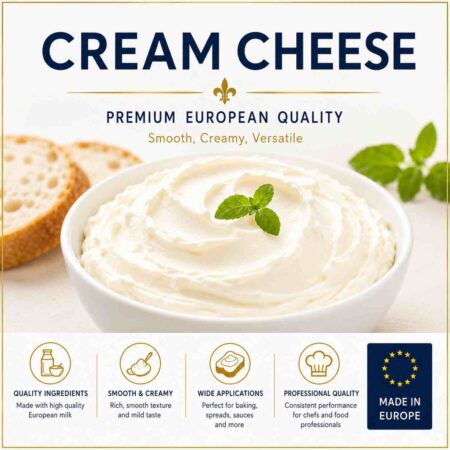
Cream Cheese (47)
-
Creamery (4)
-
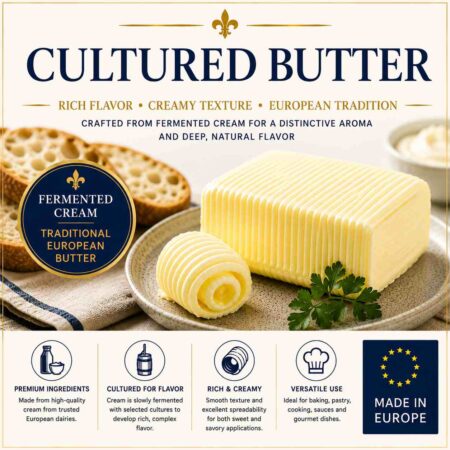
Cultured Butter (Aged Cream Butter) (2)
-
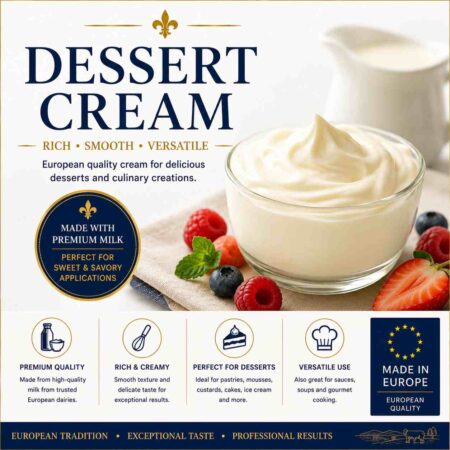
Dessert Cream (1)
-
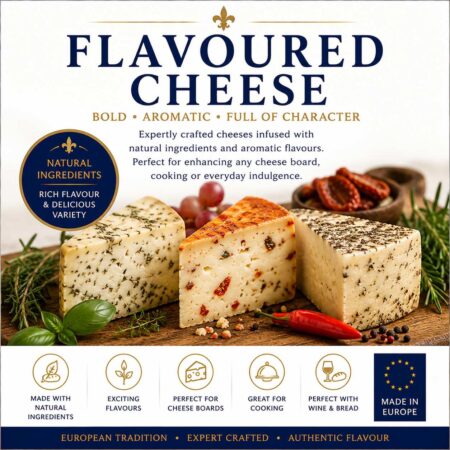
Flavoured Cheese (11)
-
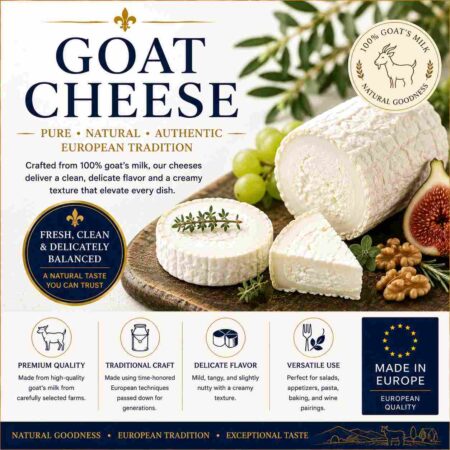
Goat Cheese (32)
-
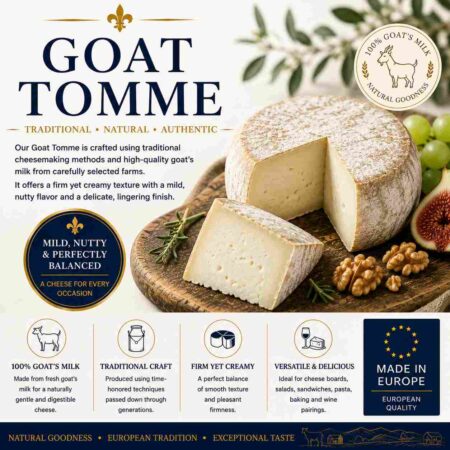
Goat Tomme (22)
-
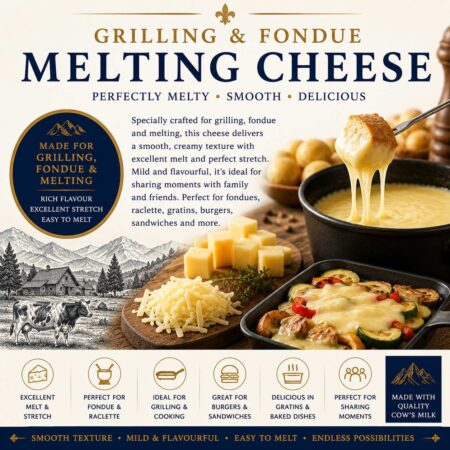
Grilling Fondue Melting Cheese (16)
-
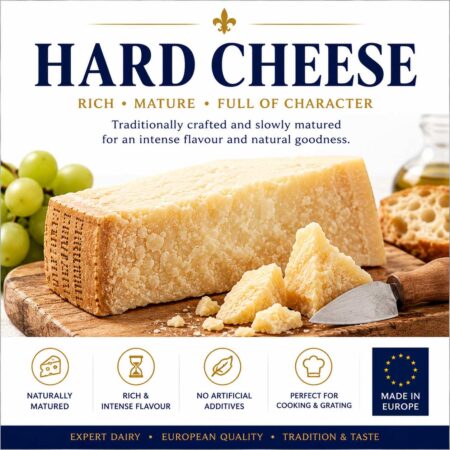
Hard Cheese (22)
-
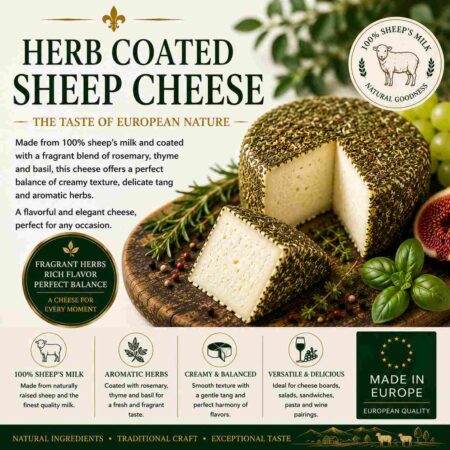
Herb-coated sheep cheese (2)
-
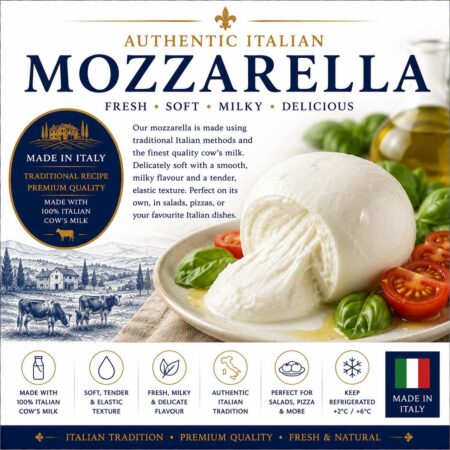
Mozzarella (2)
-
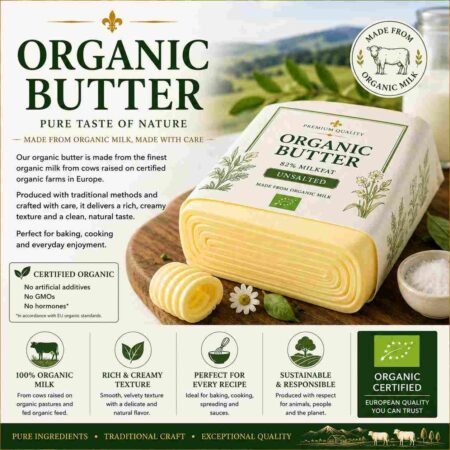
Organic Butter (13)
-
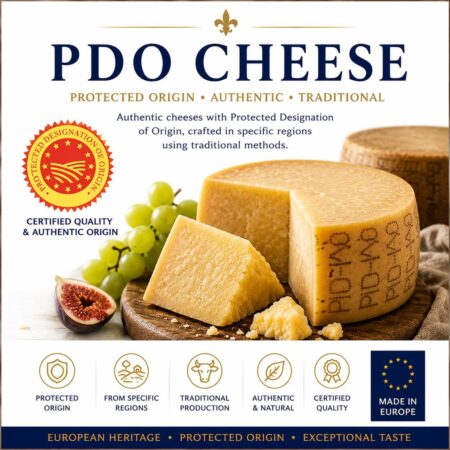
PDO Cheese (33)
-
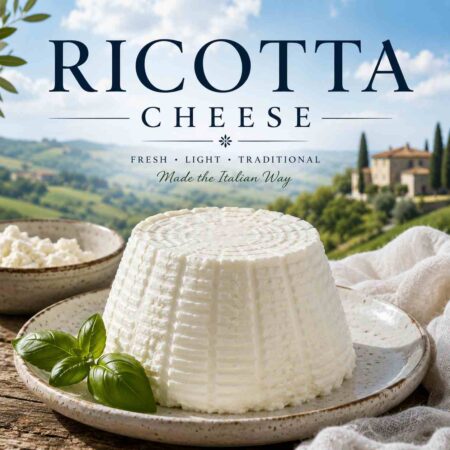
Ricotta Cheese (2)
-
Salted Butter (1)
-
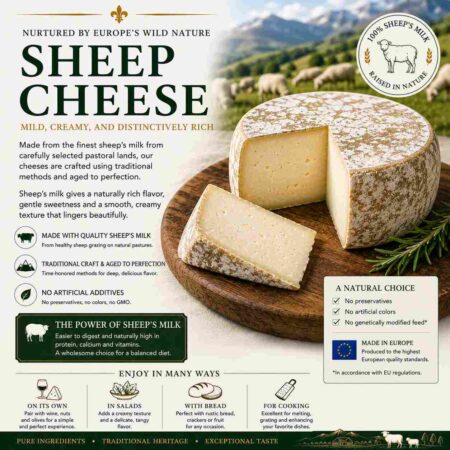
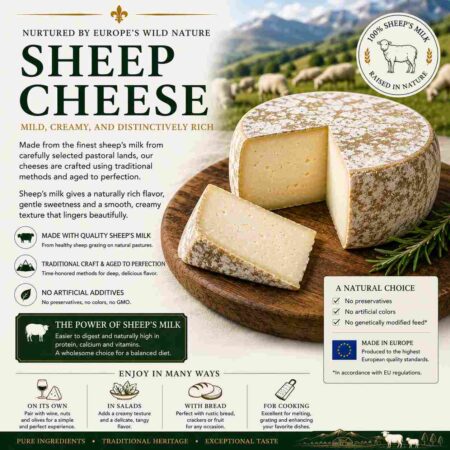
Sheep Cheese (57)
-
Sheep Milk Yogurt (1)
-
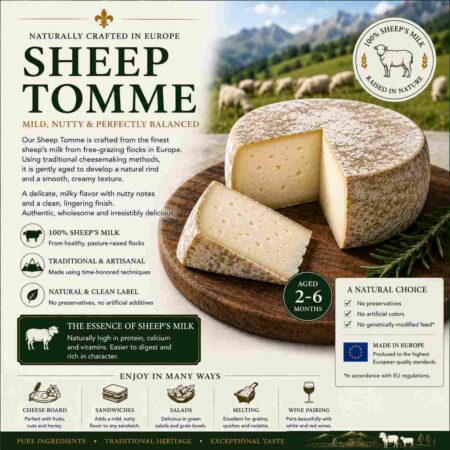
Sheep Tomme (38)
-
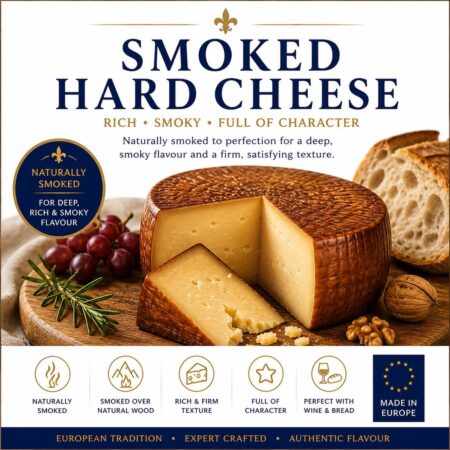
Smoked Hard Cheese (3)
-
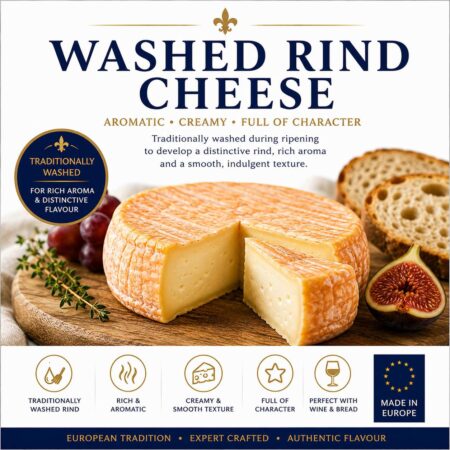
Washed Rind Cheese (12)
-
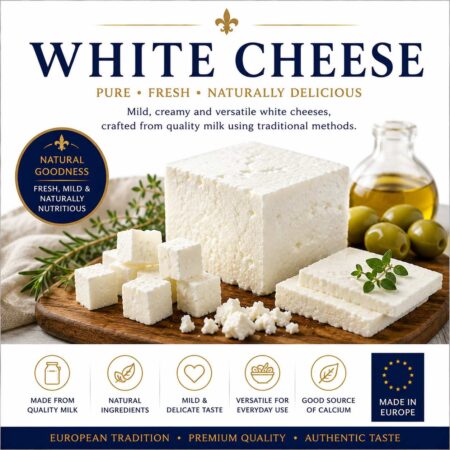
White Cheese (4)
European Food Export Consolidation for Importers
BeeBridge enables importers to combine products from multiple European producers into a single export shipment.
Instead of managing separate suppliers across different EU countries, importers can work with one export partner who coordinates:
• supplier sourcing
• volume aggregation
• pallet consolidation
• export documentation
• shipment execution
This allows importers to build mixed European pallets or containers without maintaining sourcing infrastructure inside the European Union.
Beebridge Company Positioning
European food production is regionally specialized, highly fragmented, and governed by layered regulatory frameworks that differ by product category and destination market. While product quality within the EU is generally high, structured export capability is uneven across producers.
Many producers operate successfully within domestic or regional markets but lack the administrative infrastructure required for consolidated international shipment. Differences in packaging formats, labeling standards, laboratory testing protocols, and documentation readiness frequently delay export execution.
BeeBridge identifies qualified producers, aligns volume across multiple suppliers when required, manages export documentation, coordinates packaging standards, and structures shipment programs designed for commercial continuity.
Export programs are built around deliverable volume, documentation readiness, and transport feasibility.
 Purchase Orders as a Commercial Export Tool
BeeBridge works flexibly. Orders can be placed by email, confirmed by invoice, and executed in a straightforward way. At the same time, many importers prefer to issue a formal Purchase Order when volume increases or when the shipment forms part of a larger distribution plan.
When a Purchase Order is used, it brings structure to the transaction. Product, quantity, pricing framework, and destination are aligned in one document. This makes coordination with producers faster and more precise. It also creates a clear commercial reference point for both sides of the shipment.
A Purchase Order is not a requirement for engagement. It is a tool that strengthens clarity when scale or timing requires it.
-
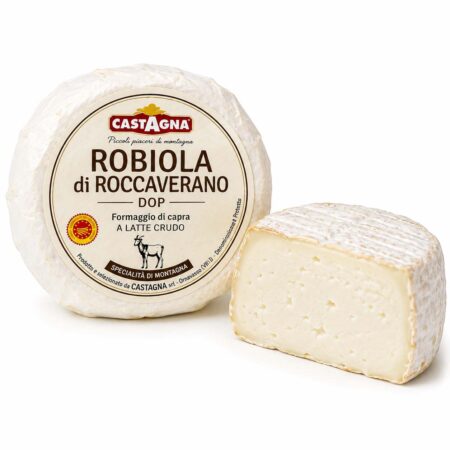
Raw Milk Robiola di Roccaverano DOP / AOP Goat Cheese 300g Piedmont Italy | Castagna Mountain Cheese & Butter
€6 Add to cart -
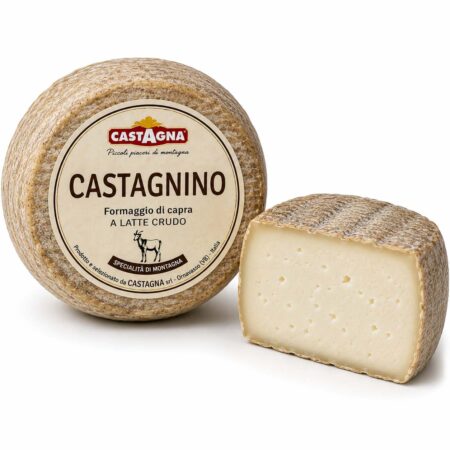
Castagnino Leaf-Aged Artisan Goat Cheese 200g Lombardy Italy | Castagna Mountain Cheese & Butter
€10 Add to cart -
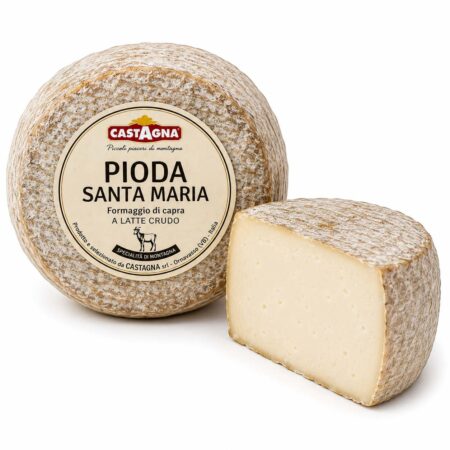
Pioda Santa Maria Artisan Goat Cheese 1kg Lombardy Italy | Castagna Mountain Cheese & Butter
€24 Add to cart -
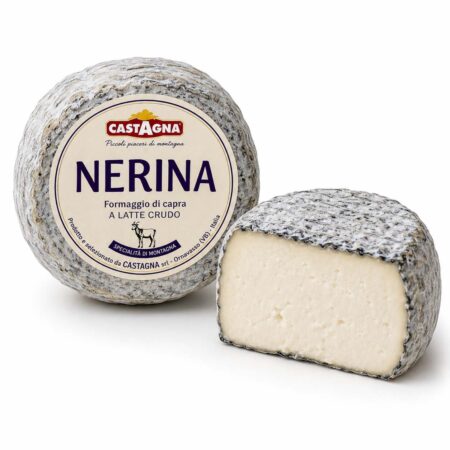
Nerina Ash-Coated Artisan Goat Cheese 250g Lombardy Italy | Castagna Mountain Cheese & Butter
€6 Add to cart -
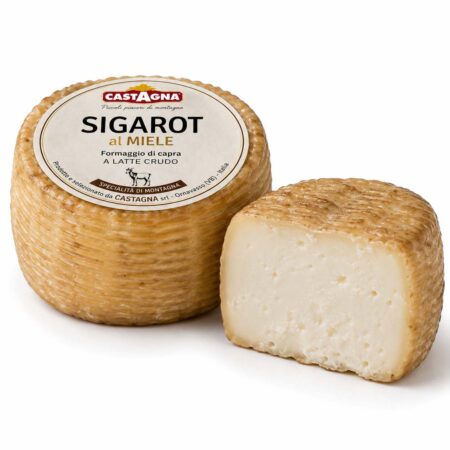
Sigarot al Miele Honey-Aged Artisan Goat Cheese 180g Lombardy Italy | Castagna Mountain Cheese & Butter
€4 Add to cart -
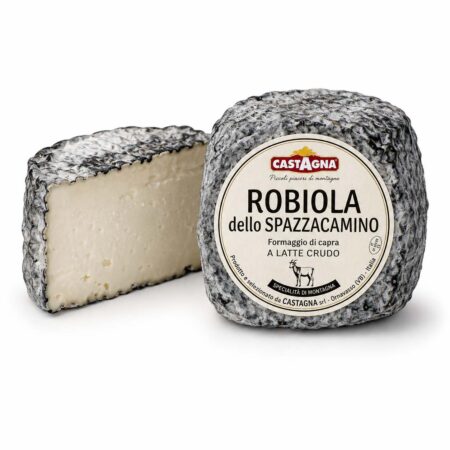
Robiola dello Spazzacamino Traditional Aged Goat Cheese 2.5kg Lombardy Italy | Castagna Mountain Cheese & Butter
€60 Add to cart -
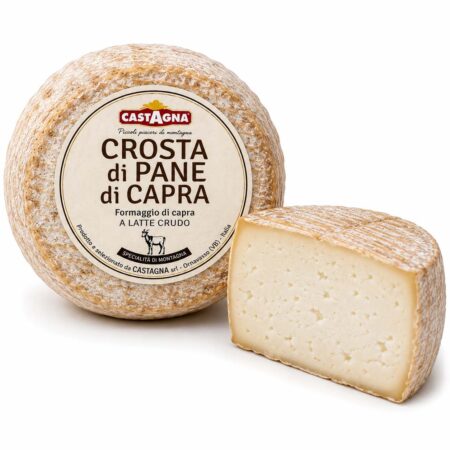
Italian Alpine Goat Cheese with Natural Bread-Crust Rind | Crosta di Pane di Capra | Castagna Mountain Cheese & Butter
€45 Add to cart -
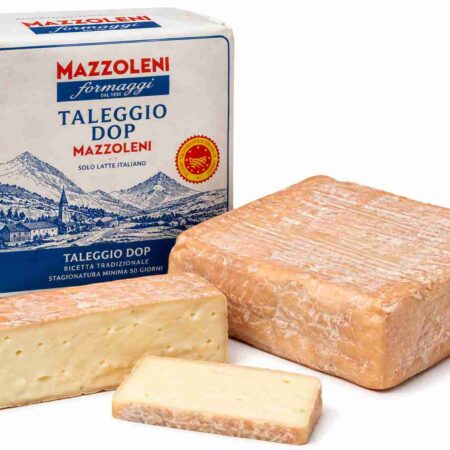
Italian AOP Taleggio Cow’s Milk Cheese 2.2kg | Taleggio DOP | Mazzoleni Formaggi
€27 Add to cart -
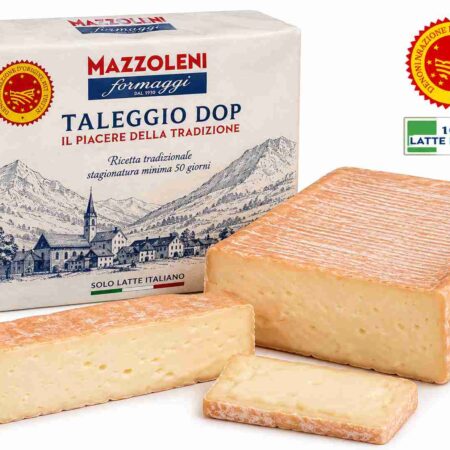
Italian AOP Taleggio Cow’s Milk Cheese “Il Piacere della Tradizione” 2.2kg | Mazzoleni Formaggi
€25 Add to cart -
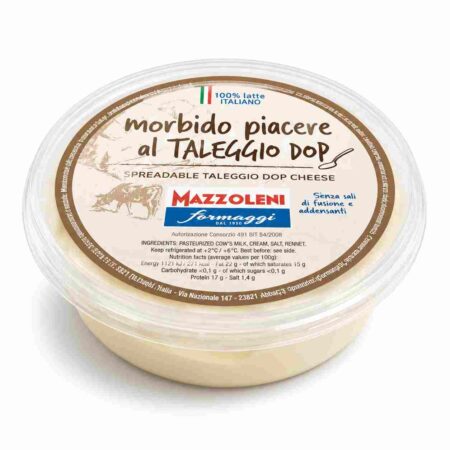
Spreadable Taleggio DOP AOP Cheese | Morbido Piacere al Taleggio | Mazzoleni Formaggi
€4 Add to cart -
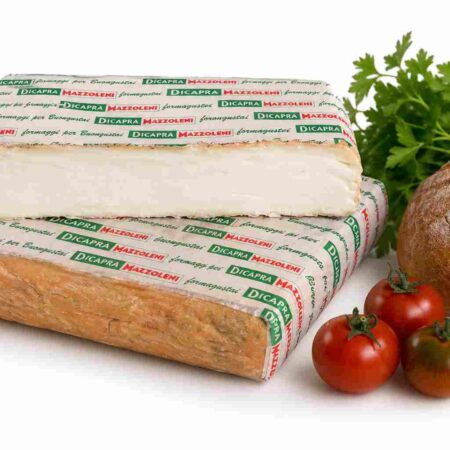
Italian Washed-Rind Goat Cheese 1.8 kg | Dicapra | Mazzoleni Formaggi
€36 Add to cart -
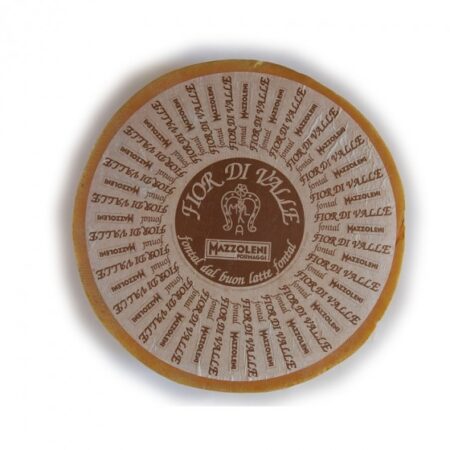
Fontal Fior di Valle Alpine Cow’s Milk Cheese 12kg | Mazzoleni Formaggi
€159 Add to cart -
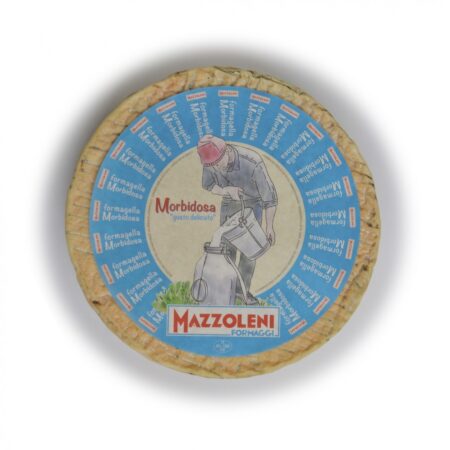
Italian Soft Washed-Rind Cheese Wheel 1.6 kg | Morbidosa | Mazzoleni Formaggi
€24 Add to cart -
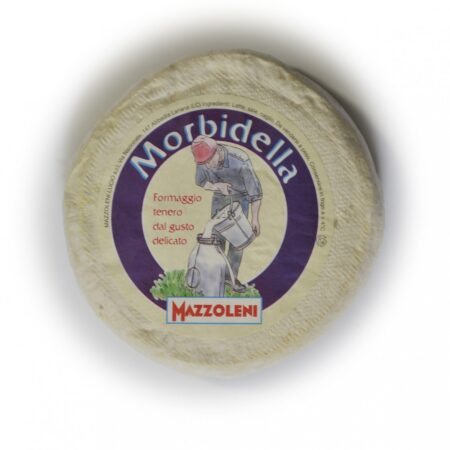
Morbidella Washed-Rind Cheese 700g Cow’s Milk | Mazzoleni Formaggi
€11 Add to cart -
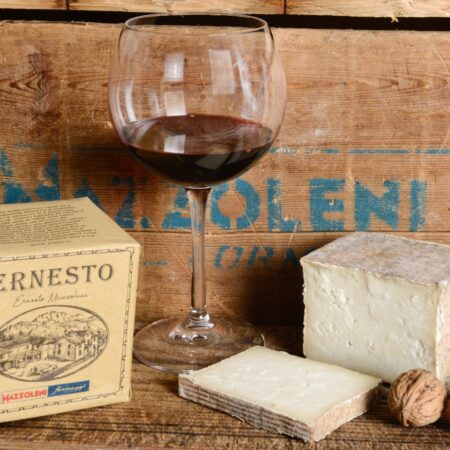
Ernesto Mazzoleni Artisan Cheese Cow’s Milk Tomme Wheel 2kg | Mazzoleni Formaggi
€40 Add to cart -
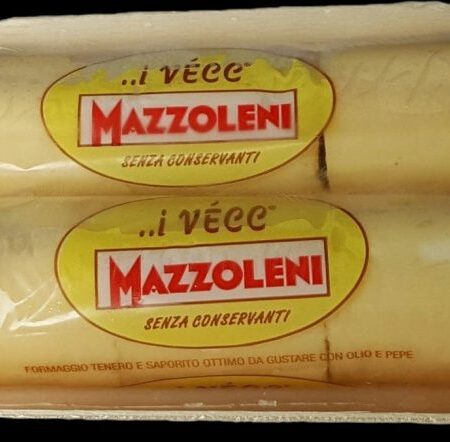
Aged Italian Goat Cheese AOP 2kg Wheel | I Vecc Mazzoleni | Mazzoleni Formaggi
€33 Add to cart -
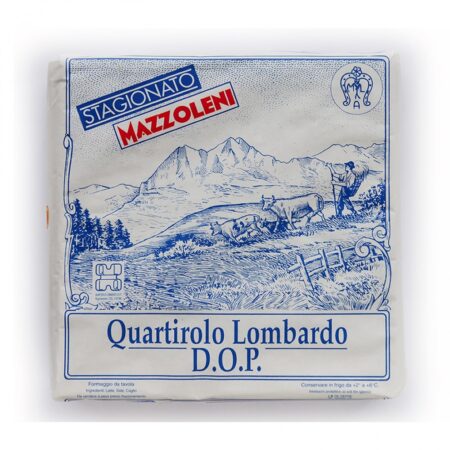
Aged Quartirolo Lombardo AOP/DOP Cow’s Milk Cheese | Italy Mazzoleni Formaggi
€30 Add to cart -
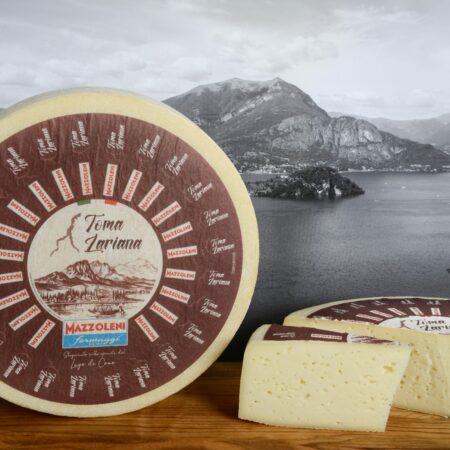
Italian Alpine AOP Cow’s Milk Cheese Tomme Wheel 1.8kg | Toma Lariana | Mazzoleni Formaggi
€20 Add to cart -
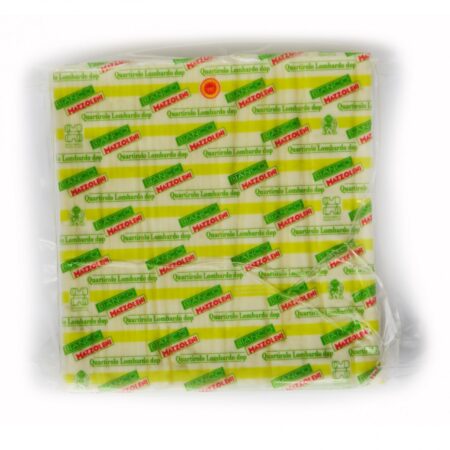
Quartirolo Lombardo AOP/DOP Cow’s Milk Cheese | Mazzoleni Formaggi
€28 Add to cart -
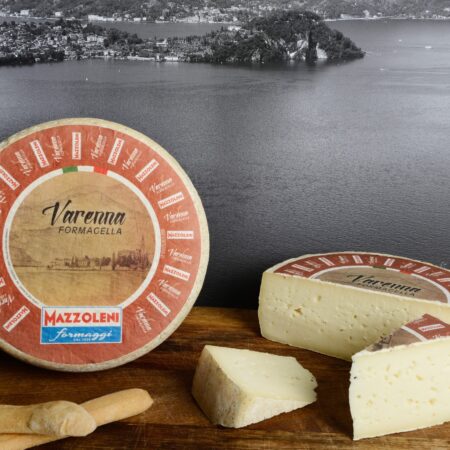
Italian AOP Semi-Aged Formaggella Wheel 1.75kg | Varenna Formaggella | Mazzoleni Formaggi
€21 Add to cart -
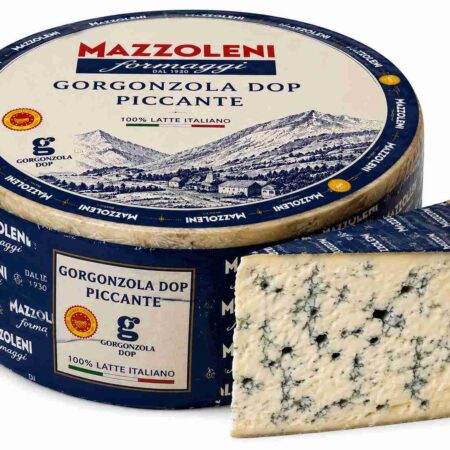
Blue Cheese Gorgonzola DOP/AOP Piccante 12KG | Mazzoleni Formaggi
€197 Add to cart -
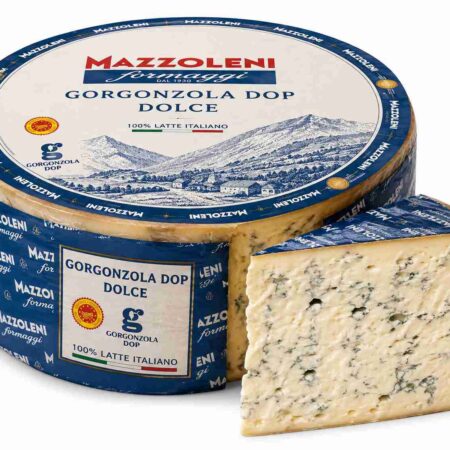
Italian AOP/DOP Blue Cheese Gorgonzola Dolce Wheel 12kg | Mazzoleni Formaggi
€162 Add to cart -
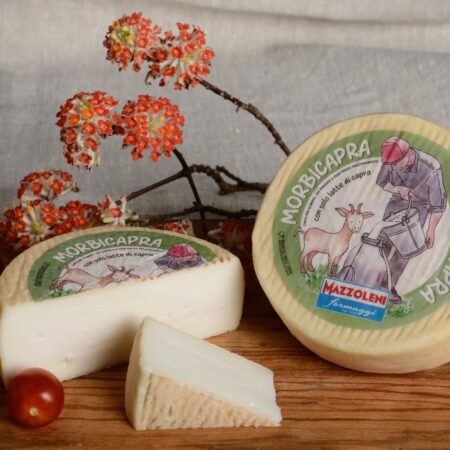
Italian AOP Washed-Rind Goat Cheese Wheel 1.8kg | Morbicapra | Mazzoleni Formaggi
€33 Add to cart -
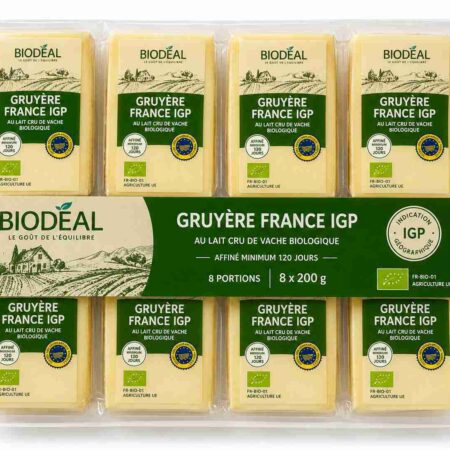
Organic French Gruyère IGP AOP Portions 8 × 200g | Biodéal
€39 Add to cart

Purchase Orders & HSBC Trade Financing
BeeBridge has structured banking relationships in place to support export transactions through formal Purchase Orders.

When a client operates under a confirmed Purchase Order, BeeBridge can engage its trade finance facilities to align payment timing between producer and importer. This creates flexibility on larger consignments without compromising allocation or shipment scheduling.
Clients who wish to operate at scale may open a professional account through BeeBridge’s structured banking channel. This allows transactions to move under defined commercial terms rather than immediate full prepayment.
For qualified orders, this structure can provide:
- Extended payment terms
- Controlled capital deployment
- Faster producer allocation
- Increased shipment volume
Trade finance is not theoretical. It is already arranged and operational through HSBC.
Purchase Orders enable this structure. They convert an order into a financeable instrument.
For importers seeking to scale beyond ad-hoc purchases, this becomes a significant commercial advantage.
Purchase Orders, Payment Terms & HSBC Trade Finance
BeeBridge supports structured trade finance for food importers purchasing from Europe.
For clients operating under a confirmed Purchase Order, BeeBridge can structure transactions through its established banking relationship with HSBC. This enables professional export financing rather than single prepayment transactions.
Many food importers search for:
- Payment terms from European suppliers
- Trade finance for food imports
- Purchase order financing
- Extended payment terms on export shipments
BeeBridge is positioned to support these requirements when order size and structure qualify.
When a client issues a formal Purchase Order, that document becomes the commercial basis for:
- Producer allocation
- Export preparation
- Structured payment terms
- Trade finance eligibility
Qualified clients may open a professional trading account linked to BeeBridge’s banking framework. This allows export shipments to operate under defined payment terms rather than full upfront payment.
For growing importers, this structure can support:
- Larger shipment sizes
- Faster inventory rotation
- Improved cash flow management
- Repeat ordering capacity
Trade finance is already arranged and operational through HSBC. Purchase Orders convert export transactions into financeable commercial instruments.
U.S. Buyers – Trade Credit & Account Setup
BeeBridge works directly with American importers and distributors seeking structured access to European food products.
As a European exporter based in Malta and operating within the EU trade framework, BeeBridge supports U.S. buyers through formal Purchase Orders and structured trade credit where applicable.
For U.S. companies intending to operate on payment terms rather than single prepayment transactions, a professional account should be established with BeeBridge prior to issuance of the first Purchase Order.
Account setup allows:
- Alignment of commercial terms
- Confirmation of banking structure
- Credit evaluation where required
- Clear documentation workflow
- Defined payment schedules
This ensures that once a Purchase Order is issued, allocation, export preparation, and financing can move without delay.
BeeBridge actively supports American companies purchasing European food under trade credit arrangements. Structuring the account in advance ensures both parties operate under aligned commercial terms from the first shipment onward.
-
Sale!
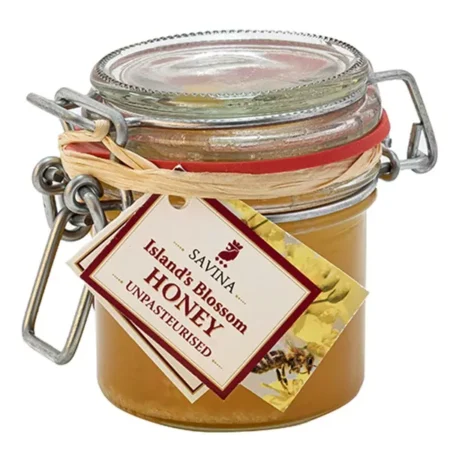
Savina Maltese Islands Blossom Honey from Malta
Original price was: €20.€12Current price is: €12. Add to cart -
Sale!
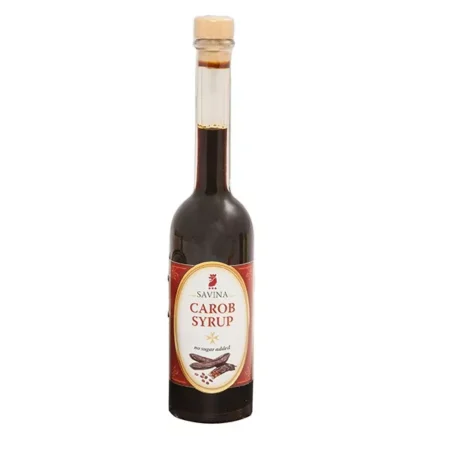
Savina Gozo Carob Syrup in Glass Bottle from Malta
Original price was: €18.€11Current price is: €11. Add to cart -
Sale!
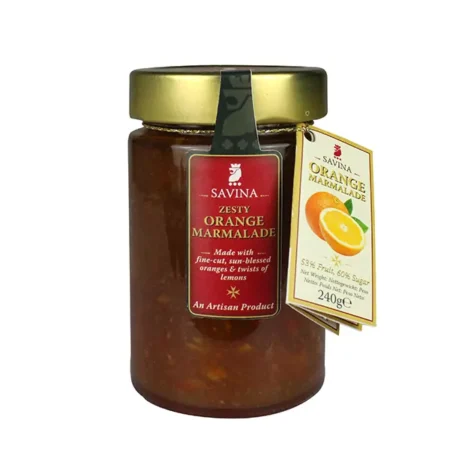
Savina Orange Marmalade from Gozo Malta
Original price was: €16.€9Current price is: €9. Add to cart -
Sale!
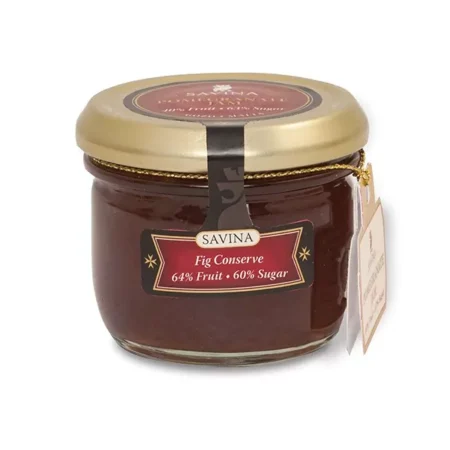
Savina Sun-ripened Fig Conserve from Malta
Original price was: €14.€9Current price is: €9. Add to cart -
Sale!
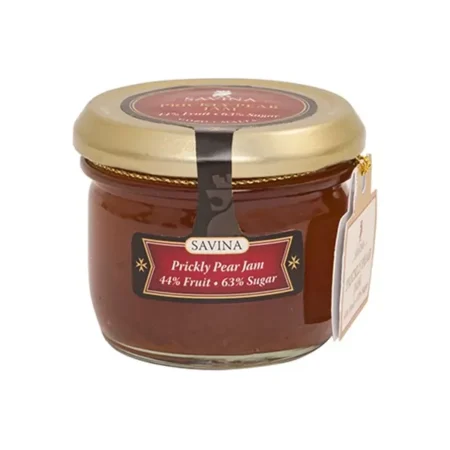
Savina Gozo – Bajtrija – Prickly Pear Jam from Malta
Original price was: €14.€9Current price is: €9. Add to cart -
Sale!
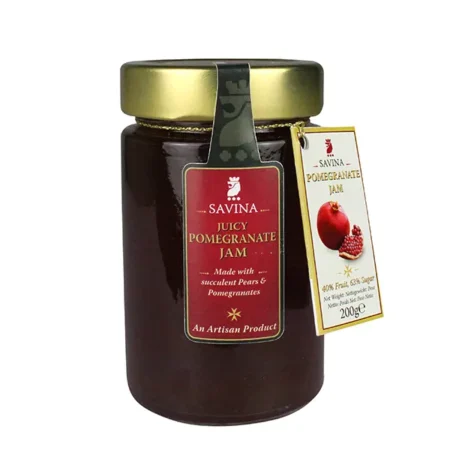
Savina Gozo Pomegranate Jam from Malta Jar 200g
Original price was: €14.€9Current price is: €9. Add to cart -
Sale!
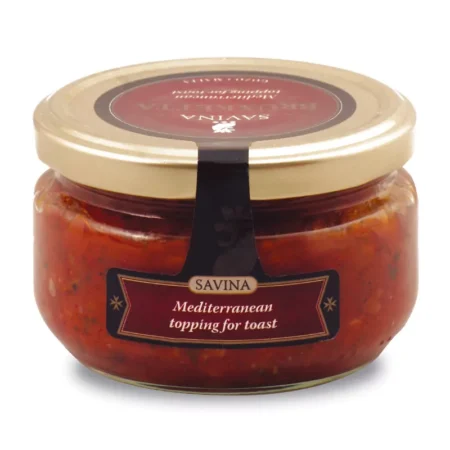
Savina Bruxketta Mediterranean Topping for Toast 125g
Original price was: €15.€9Current price is: €9. Add to cart -
Sale!
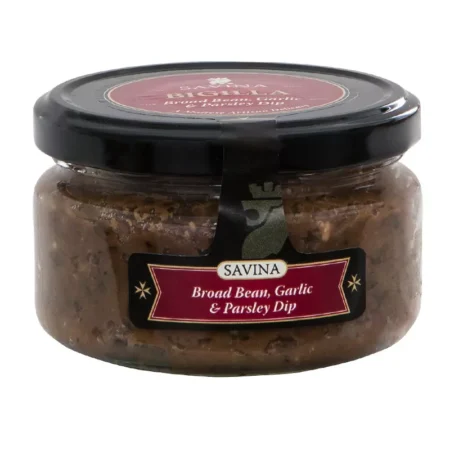
Savina Bigilla (Broad Bean, Garlic and Parsley Dip) 125g
Original price was: €15.€9Current price is: €9. Add to cart -
Sale!
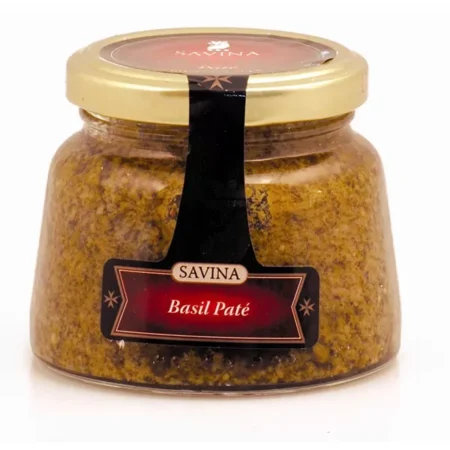
Savina Basil Pâté
Original price was: €16.€9Current price is: €9. Add to cart -
Sale!
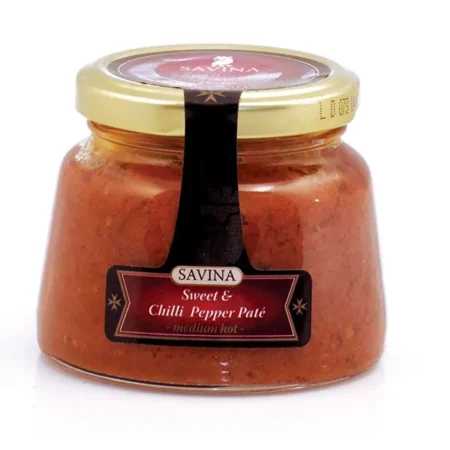
Savina Sweet & Chilli Pepper Pâté Savina Gozo
Original price was: €16.€9Current price is: €9. Add to cart -
Sale!
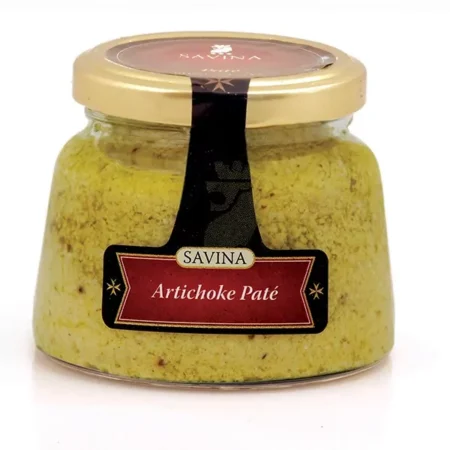
Savina Artichoke Pâté Savina Gozo
Original price was: €16.€9Current price is: €9. Add to cart -
Sale!
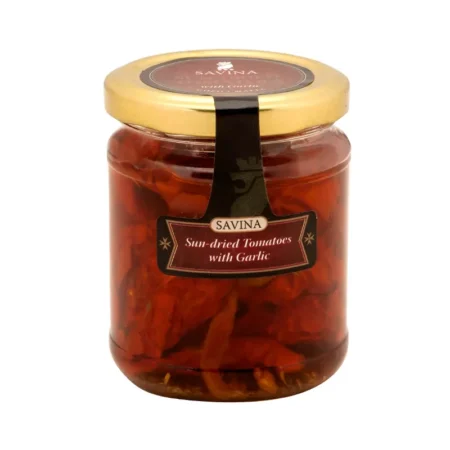
Savina Sun Dried Tomato with Garlic
Original price was: €19.€11Current price is: €11. Add to cart -
Sale!
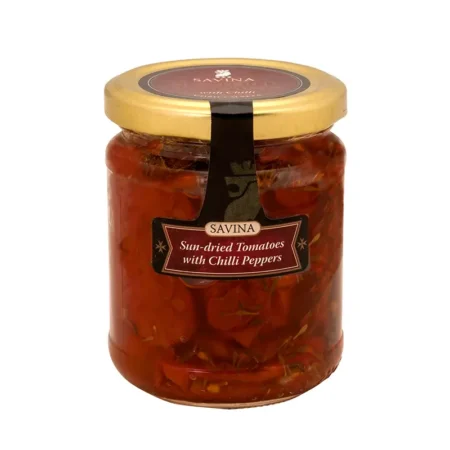
Savina Sundried Tomatoes with Chilli Peppers
Original price was: €19.€11Current price is: €11. Add to cart -
Sale!
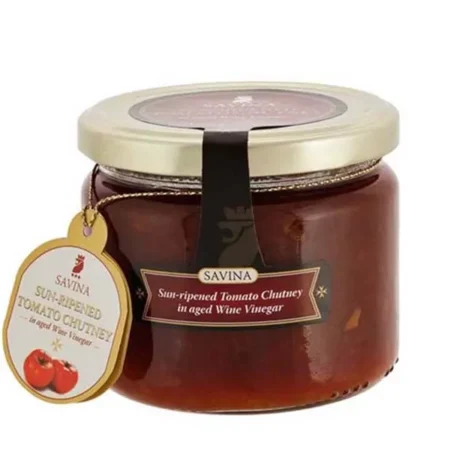
Savina Mediterranean Fig Chutney in Aged Wine Vinegar 320g
Original price was: €16.€9Current price is: €9. Add to cart -
Sale!
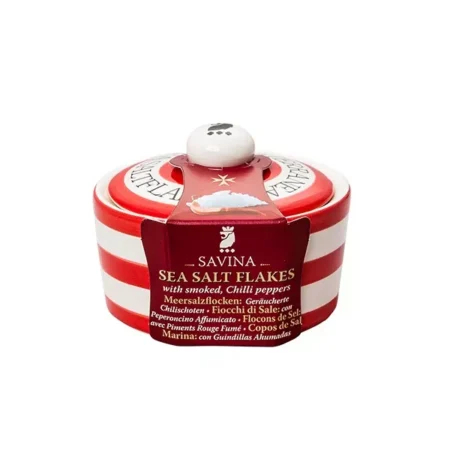
Savina Sea Salt Flakes with Smoked Chilli Peppers 65g
Original price was: €15.€12Current price is: €12. Add to cart -
Sale!
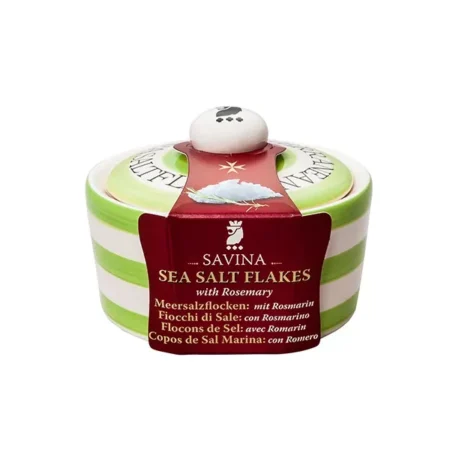
Savina Sea Salt Flakes with Fresh Rosemary Natural Hand-Harvested Pyramid Crystals
Original price was: €16.€9Current price is: €9. Add to cart -
Sale!
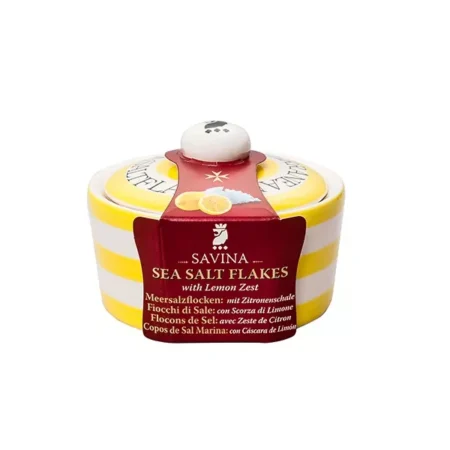
Savina Sea Salt Flakes with Lemon Zest Natural Hand-Harvested Pyramid Crystals
Original price was: €16.€9Current price is: €9. Add to cart -
Sale!
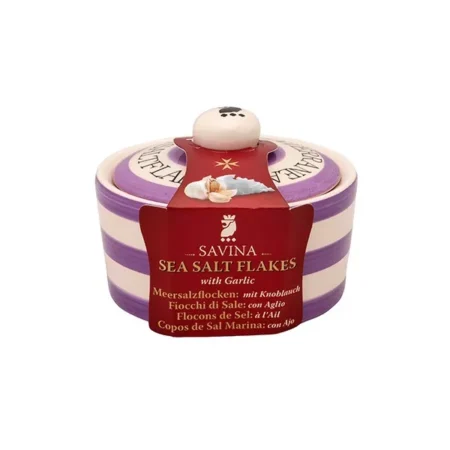
Savina Sea Salt Flakes with Wild Garlic Natural Hand-Harvested Pyramid Crystals
Original price was: €16.€9Current price is: €9. Add to cart -
Sale!
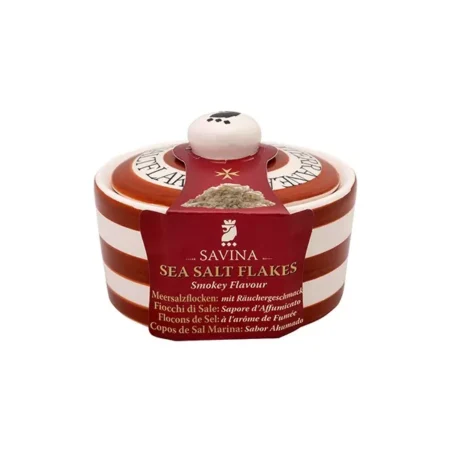
Savina Mediterranean Sea Salt Flakes – Smokey Flavour Natural Hand-Harvested Pyramid Crystals
Original price was: €16.€9Current price is: €9. Add to cart -
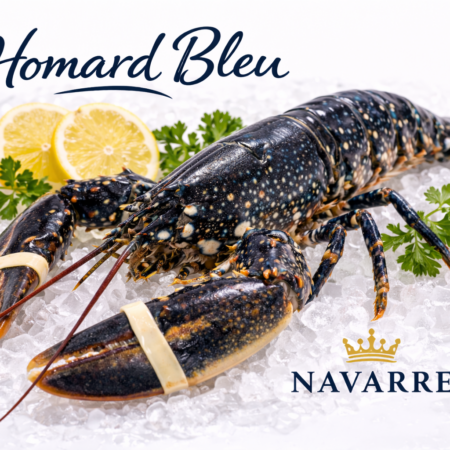
Homard Bleu — European Blue Lobster (Homarus gammarus) ヨーロッパ産ブルーロブスター
Read more -
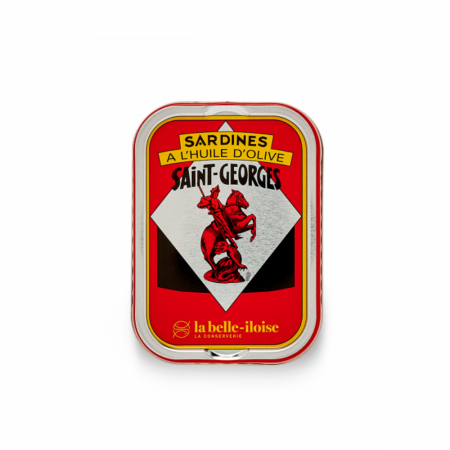
French Canned Sardines in Extra Virgin Olive Oil
€4 Add to cart -
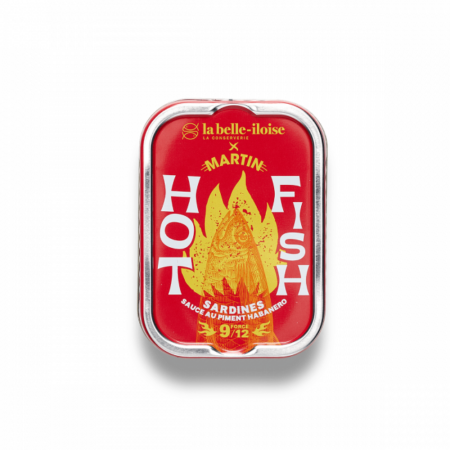
French Canned Sardines with Habanero Pepper
€5 Add to cart -
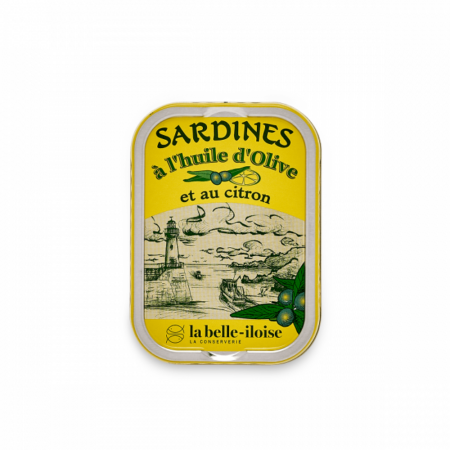
French Canned Sardines in Extra Virgin Olive Oil with Lemon
€4 Add to cart -
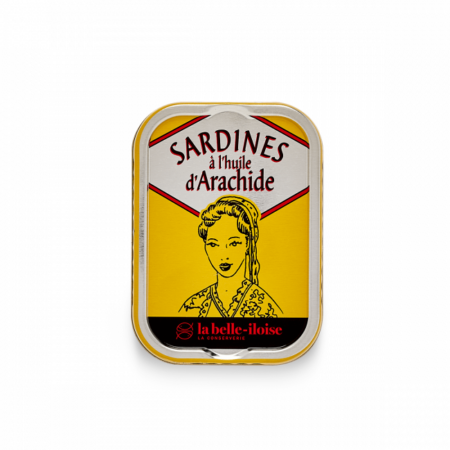
French Canned Sardines in Peanut Oil
€4 Add to cart
Scope of Operations
BeeBridge operates across all EU member states and engages with producers whose operations meet export-grade compliance standards, including traceability, sanitary health certification, and production consistency.
Core operational functions include:
- Supplier identification and qualification based on category, capacity, and export readiness
- Production volume assessment and allocation by harvest or production cycle
- Multi-supplier consolidation where single-source capacity is insufficient
- Laboratory coordination for category-specific requirements
- Export documentation preparation aligned with destination-country rules
- Labeling alignment for language, format, and regulatory requirements
- Freight coordination via approved forwarders
- Shipment scheduling according to agreed timelines
The company maintains an EORI registration within the European Union and coordinates export procedures in accordance with EU trade regulations.
Shipment structuring is performed per container, per pallet, or per airfreight lot depending on category and volume.
Export Execution
BeeBridge coordinates European food export through a structured consolidation and shipment process.
Producers are sourced across the European Union. Where required, product is consolidated through our French export handling infrastructure before international shipment.
This enables:
- Multi-producer aggregation into a single export lot
- Centralized documentation control
- Inspection and packaging alignment
- Freight coordination from a single export point
Shipment structure is determined by product type, volume, and destination market.
Products of Animal Origin (POAO) – Structured EU Export

BeeBridge operates within the regulatory framework governing Products of Animal Origin (POAO) exported from the European Union.
POAO exports are not casual shipments. They move under sanitary certification, veterinary oversight, and controlled export documentation depending on destination market.
Honey, honeycomb, dairy products, and other animal-derived foods fall within regulated categories requiring structured export handling.
BeeBridge manages:
- Coordination of sanitary certification where required
- Alignment with EU competent authorities
- Export declaration under EU customs procedures
- Documentation consistency for destination clearance
- Producer compliance verification prior to shipment
For importers, this matters.
Many EU producers are capable of producing high-quality animal-origin products but are not structured for international sanitary export. The gap is not quality — it is documentation alignment and procedural execution.
BeeBridge operates at that interface.
When exporting animal-origin products, the company structures the shipment from a regulatory standpoint before commercial movement occurs.
This reduces clearance risk, documentation inconsistency, and shipment delay.
POAO is one of the core regulatory environments BeeBridge operates within.
-

Chestnut Honeycomb Frames – Super Set (B2B Export Supply)
€70 Add to cart -
Sale!
Savina Maltese Islands Blossom Honey from Malta
Original price was: €20.€12Current price is: €12. Add to cart -
Sale!
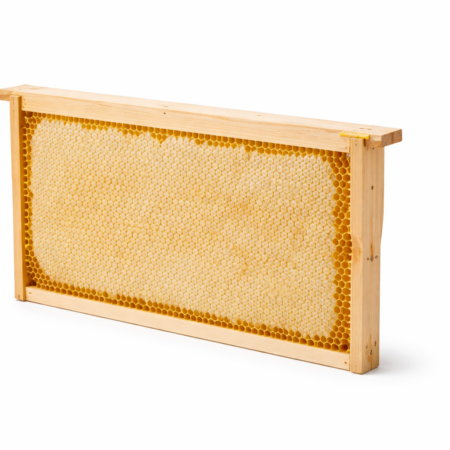
Romanian Acacia Honeycomb in Langstroth Wooden Frame
Original price was: €150.€92Current price is: €92. Add to cart -
Sale!
Romanian Polyfloral Honeycomb in Wooden Frame
Original price was: €170.€110Current price is: €110. Add to cart -
Sale!
Hungarian Acacia Honeycomb in Langstroth Wooden Frame
Original price was: €170.€110Current price is: €110. Add to cart -
Sale!

Hungarian Organic (Bio) Acacia Honey – 250g Glass Jar
Original price was: €9.€7Current price is: €7. Add to cart -
Sale!
Hungarian Acacia Honey – 250g Glass Jar
Original price was: €30.€23Current price is: €23. Add to cart -
Sale!
Hungarian Sour Cherry Blossom Honey – 250g Glass Jar
Original price was: €10.€7Current price is: €7. Add to cart -
Sale!
Hungarian Organic Polyfloral Honey – 250g Glass Jar
Original price was: €10.€7Current price is: €7. Add to cart -
Sale!

Hungarian Acacia Honeycomb – 200g Cut Comb
Original price was: €12.€7Current price is: €7. Add to cart -
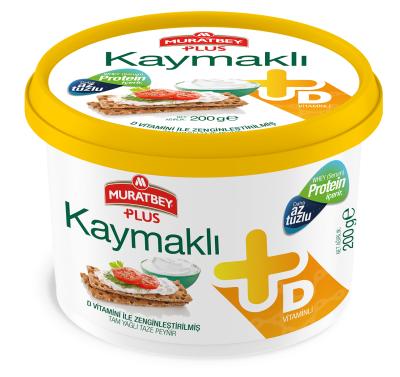
Premium Turkish Cow’s Milk Sweet Cream Cheese with Honey (Honey Kaymaklı) | Muratbey
Read more
European Honey & Honeycomb (HS Code 0409 / 0409.00)

BeeBridge structures export of raw European honey and unblended honeycomb frames sourced directly from certified EU apiaries.
The primary export focus is whole honeycomb frames harvested at natural seal and prepared under EU hygiene standards for international shipment.
Monofloral honey programs are structured where production meets:
- Single-apiary integrity
- Single-season harvest
- Verified floral source
- Direct-from-hive control
Retail jar programs are considered only under strict origin and quality conditions.
Honey & Honeycomb (HS Code 0409)
BeeBridge’s flagship export product is European honeycomb frames. This is the category where BeeBridge has the highest control: direct apiary relationships, harvest-level visibility, and origin integrity preserved from hive to export.
BeeBridge maintains active working relationships with 20+ certified European apiaries. These relationships are not passive listings. BeeBridge communicates directly with producers around harvest windows, expected yield, and lot availability, and structures exports around what is real and deliverable.
BeeBridge’s sourcing is built around traceable origin. Lots remain associated with the producing apiary and harvest period. This is the foundation of how BeeBridge selects producers and allocates volume.
Whole raw frames are sourced directly from certified European apiaries and preserved in their original structure. Each frame remains linked to its apiary and harvest cycle.
Export programs include:
- Raw honeycomb frames
- Single-origin floral honey
- Structured private-label supply where appropriate
Honeycomb exports are handled with full origin integrity and export documentation under EU customs framework.
 Hungary: Sour Cherry Blossom Honey (Short Harvest Window)
One BeeBridge partner in Hungary specializes in Sour Cherry Blossom honey.
This harvest window is approximately six days per year.
Annual volume from this supplier is typically 300 kg to 1,500 kg, depending on seasonal conditions. BeeBridge confirms available volume after harvest and structures export allocation based on confirmed availability.
This is a representative BeeBridge relationship: narrow bloom window, finite volume, direct producer communication, and origin-defined lots.
Who BeeBridge Serves
BeeBridge works with importers and distributors who require structured access to European food producers without maintaining their own sourcing infrastructure inside the EU.
This includes operators who:
- Do not maintain an office in Europe
- Require aggregation across multiple producers
- Need centralized export handling
- Require EU-origin product with traceable sourcing
- Want controlled access to high-terroir or specialty production
BeeBridge functions as the European execution layer behind their purchasing strategy.
Why Importers Use BeeBridge
European producers are excellent at production.
They are not structured for international execution at scale — particularly in regulated categories such as Products of Animal Origin.
BeeBridge exists to remove execution friction from the European side of the transaction.
Importers use BeeBridge because it delivers:
Regulatory Competence in POAO
Honey, honeycomb, dairy, and other animal-origin products move under controlled sanitary frameworks. BeeBridge structures export in alignment with EU procedures and destination-country requirements before shipment occurs.
French Consolidation Infrastructure
Product sourced across multiple EU member states can be centralized through structured French export handling infrastructure. This allows aggregation, inspection alignment, documentation control, and coordinated departure from a single export point.
Direct Producer Relationships
BeeBridge maintains active working relationships with certified European producers rather than trading through layered intermediaries. Allocation discussions occur directly with harvest-level visibility.
Harvest-Based Allocation Control
For finite or short-window products, BeeBridge structures volume around confirmed harvest yield, not assumed availability.
Documentation & Customs Execution
Export declarations, sanitary documentation, certificates of origin, and lot-level traceability are coordinated as part of shipment structuring rather than treated as afterthoughts.
Structured Shipment Planning
Each consignment is planned based on volume, product sensitivity, regulatory requirements, and delivery timeline.
BeeBridge centralizes the European execution layer. Producers focus on production. Importers focus on distribution. BeeBridge manages the regulatory, consolidation, and export interface between them.

Export Handling & Consolidation – France Fulfilment Hub
BeeBridge operates through a dedicated French fulfilment base located within the greater Rungis wholesale logistics corridor south of Paris — one of Europe’s most concentrated food distribution environments.
France Fulfilment Warehouse Address:
Écoparc des Cettons
10 rue Panhard Levassor
78570 Chanteloup-Les-Vignes
France
This facility functions as BeeBridge’s European consolidation, staging, and export preparation point.
Products sourced across multiple EU member states are delivered to this site for receipt, lot verification, conditioning, palletization, and preparation for international shipment.
The fulfilment base enables:
- Aggregation of product from multiple European producers into a single structured export consignment
- Controlled-access storage within a secured logistics environment
- Palletization and packaging alignment prior to departure
- Centralized preparation of export documentation
- Coordinated freight dispatch from a single export origin
Storage is commercially structured. Long-hold storage can be maintained at approximately €40 per pallet position per month, allowing shipment timing to be aligned with allocation, freight scheduling, or importer readiness without excessive carrying cost.
This provides operational stability for importers requiring:
- Staggered inbound deliveries from different producers
- Consolidation across regions before departure
- Flexibility in shipment timing
- Allocation management prior to export execution
Air freight consignments are typically routed through Paris-area cargo terminals to reduce transit time for high-value or structurally sensitive goods such as honeycomb frames and regulated Products of Animal Origin.
Alternative freight structures are evaluated based on volume, destination, and commercial viability.
The French fulfilment hub is not an intermediary warehouse.
It is the operational staging point for BeeBridge’s European export activity.
It provides physical infrastructure behind the sourcing and documentation layer, converting dispersed European production into structured international shipment.
Commercial Approach
BeeBridge structures each export per client and per consignment. Quotations are built from the ground up once product availability and requested volume are confirmed. For commercial-scale orders, BeeBridge operates against formal Purchase Orders (POs).
A confirmed Purchase Order enables:
- Volume allocation from producers
- Consolidation scheduling
- Trade financing discussions where applicable
Purchase Orders form the operational basis of structured export.
What Determines Price
Export pricing is based on five measurable components.
- Producer Cost
The confirmed price from the producing apiary or supplier, based on:
- Available volume
- Format requested
Producer cost is confirmed before Purchase Order acceptance.
- Preparation & Handling
Preparation and handling reflect the physical work required to convert European production into export-ready shipment.
This includes:
- Inspection and lot confirmation upon arrival at the French fulfilment hub
- Conditioning for export, including format stabilization where required
- Consolidation through BeeBridge’s French fulfilment infrastructure
- Palletization and structured export preparation
BeeBridge can prepare product in multiple commercial formats prior to departure:
Wholesale Format
Palletized bulk consignments prepared for distributor-level import.
Ingredient / Industrial Supply
Food manufacturing or processing-grade shipments structured for further use by the importer.
E-Commerce / Retail-Ready Preparation of EU Food for Export

Where required, product can be prepared with export-compliant packaging, labeling alignment, and dispatch configuration prior to shipment to the destination country for final distribution.
Label application, packaging adjustment, and e-commerce configuration are performed through the French fulfilment infrastructure and are quoted separately based on labor and material requirements.
Preparation cost reflects the real handling requirements of the requested format, including labor, packaging material, staging time, and dispatch structure.
The handling layer converts producer output into commercially usable inventory for the importing client.
- EU Documentation & Regulatory Execution
Export documentation for European food — particularly Products of Animal Origin — is a regulated process managed in coordination with EU and French competent authorities.
For honey, honeycomb, dairy, and other animal-origin categories, shipments must align with sanitary and veterinary frameworks prior to departure from the European Union.
Depending on product classification and destination market, documentation may include:
- EU export declarations filed under the appropriate customs procedure
• EXPADON 2 sanitary certification issued through the French veterinary authority for Products of Animal Origin
• Official Health Certificates aligned to destination-country import requirements
• Veterinary or sanitary documentation specific to animal-origin goods
• Laboratory analysis certificates for bulk honey where required by importing authorities
• Certificates of origin
• Transport documentation and lot-level traceability records
• Phytosanitary certificates where required for plant-based products
• Live animal passports and movement certification where applicable
Sanitary certification under EXPADON 2 must correspond precisely to product description, lot identification, packaging format, and declared destination.
For bulk honey, laboratory certification may be required depending on the importing country’s regulatory framework. Honeycomb frames are documented according to their applicable regulatory classification.
Phytosanitary certification is coordinated when plant-origin goods require official inspection and approval prior to export.
Where live animals are involved, movement documentation and passports are issued in compliance with EU animal transport regulations.
Documentation preparation is structured before shipment departure to ensure regulatory alignment with destination-country requirements.
Documentation cost reflects regulatory authority involvement, laboratory coordination where required, and administrative preparation aligned to the shipment’s classification.
For regulated food categories, documentation is an integral part of export execution.
- Freight
Freight is quoted based on:
- Product sensitivity
- Weight and volumetric dimensions
- Departure point
- Destination country
Freight is structured per shipment once volume and format are confirmed.
For specialty honey and honeycomb, air transport is typically used to preserve structural integrity and reduce transit exposure.
Freight cost reflects:
- Final gross weight
- Packaging dimensions
- Departure airport
- Destination airport
Freight can be quoted:
- Separately
- Or as part of a total delivered price
The final structure is defined before Purchase Order confirmation.
📩 [email protected]
📞 +356 7714 4284
BeeBridge Ltd. (Malta / EU)
EORI / VAT : MT3202-0626
Soken Midosuji Building 2nd floor,
3-5-13, Awaji-machi,, Chuo-ku, Osaka-shi,
Osaka, 541-0047, Japan
“Every frame is a season. Every hive is a story.”