
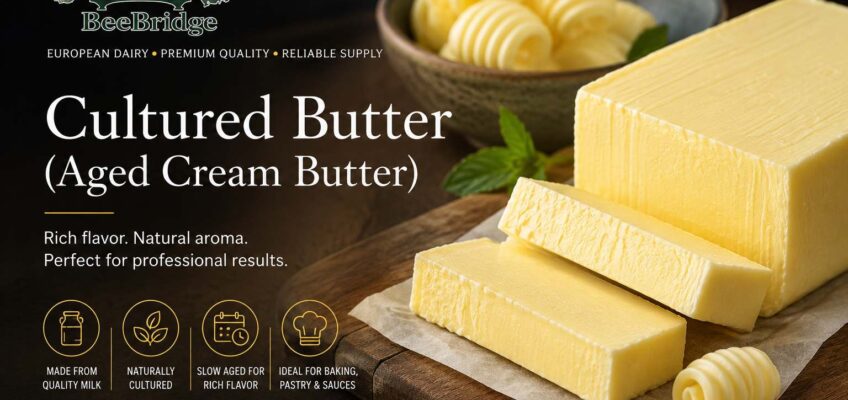
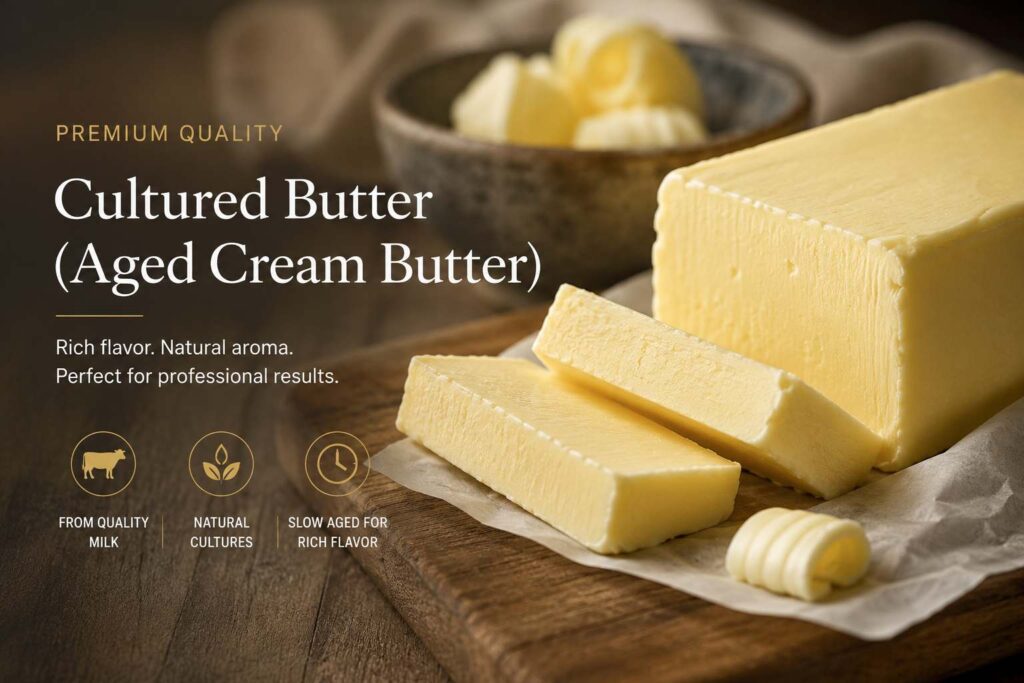
Cultured Butter (Aged Cream Butter)
Europe’s Most Extraordinary Butter Begins Before It Is Churned
There is a moment in butter making that almost nobody outside the dairy industry ever sees. The milk has already been collected. The cream has already been separated. At this point, most modern factories simply churn the cream into butter. The process is efficient. Fast. Predictable. The butter is pleasant, mild and familiar. But Europe’s finest butter makers stop. They wait. For hours—and sometimes much longer—the cream is allowed to mature naturally before churning. During this slow ageing process, carefully selected lactic cultures transform the cream, developing hundreds of aromatic compounds that simply cannot exist in ordinary sweet cream butter. Only then is the butter churned. That single decision changes everything.
Butter with a Story, Not Just a Fat Percentage
 Every butter contains butterfat.
Cultured butter contains character.
The ageing process creates flavours that are impossible to reproduce simply by adding more fat or using richer milk.
Instead of tasting simply creamy, cultured butter develops remarkable complexity.
You may notice:
- Fresh cream
- Roasted hazelnuts
- Warm brioche
- Caramel
- Yogurt
- Sweet grass
- Wild flowers
- Fresh milk
- Gentle acidity
- Lingering buttery sweetness
Every producer develops its own signature flavour.
Just as every winery produces different wines from similar grapes, every cultured butter develops its own personality through cream maturation.
Time Is the Secret Ingredient
Modern butter production is built around efficiency.
Traditional cultured butter is built around patience.
Cream maturation is expensive.
It occupies storage tanks.
It requires skilled dairy technicians.
It slows production.
For many industrial manufacturers, it simply isn’t commercially worthwhile.
That is precisely why cultured butter has become one of Europe’s great luxury dairy products.
You are paying for time.
Why Professional Pastry Chefs Refuse to Compromise
Ask almost any professional pâtissier what ingredient matters most in a croissant.
Many will answer:
“The butter.”
Not the flour.
Not the yeast.
Not the oven.
The butter.
During lamination, butter becomes hundreds of delicate layers inside the pastry.
As the croissant bakes, most ordinary butter loses much of its aroma.
Cultured butter does not.
Its flavour survives the oven.
Its aroma fills the bakery.
Its richness remains in every bite.
That is why many of Europe’s finest bakeries insist on cultured butter despite the higher cost.
Where Cultured Butter Truly Shines
Cultured butter isn’t simply “good on toast.”
It becomes the defining ingredient in dishes where butter is expected to be tasted, not hidden.
Croissants ★★★★★
Perhaps the ultimate showcase.
The aroma survives baking and creates a noticeably richer flavour than standard butter.
Kouign-Amann
Originally from Brittany, this iconic pastry depends almost entirely on exceptional butter.
Cultured butter transforms it.
Brioche
Rich enough to carry the butter’s aroma while remaining beautifully delicate.
Danish Pastries
The cultured cream notes remain surprisingly vibrant after baking.
Puff Pastry
Layer after layer of crisp pastry separated by intensely flavoured butter.
Madeleines
Simple ingredients allow cultured butter to become the star.
Financiers
Brown butter made from cultured butter creates remarkable depth alongside almond flour.
Beurre Blanc
One of France’s great sauces.
Made with ordinary butter, it is excellent.
Made with cultured butter, it becomes unforgettable.
Fresh Pasta
A simple butter sauce over handmade pasta becomes a showcase for the butter itself.
Italian chefs understand this instinctively.
Risotto
Finish the rice with cultured butter instead of ordinary butter.
The difference is immediate.
The butter contributes flavour rather than simply richness.
Steak
Allow a slice of cultured butter to melt over a perfectly cooked steak.
Its gentle acidity balances the richness of the meat in a way ordinary butter rarely achieves.
Seafood
Scallops.
Lobster.
Langoustines.
Turbot.
Simple seafood preparations become extraordinary when finished with exceptional butter.
Three Exceptional Producers. Three Different Expressions.
BeeBridge has carefully selected producers who continue to mature their cream before churning.
🇮🇹 Castagna
An extraordinary Italian matured cream butter that demonstrates cultured butter is not exclusively French. Rich, elegant and deeply aromatic, it has become one of the most distinctive products in the BeeBridge portfolio.
🇫🇷 Keramis
Certified organic cultured butter produced from carefully matured cream. Combining traditional French butter making with organic farming and Fair Trade principles, Keramis delivers both exceptional flavour and a compelling sustainability story.
🇮🇹 Latteria Sociale Valtellina
Produced in the Italian Alps using grass-fed mountain milk, this cultured butter captures the character of Alpine dairying. The combination of high-quality mountain milk and cream maturation produces a butter with exceptional balance and finesse.
Why Is Cultured Butter Still So Rare?
Because it is difficult to make.
It requires time.
Experience.
Patience.
And producers willing to sacrifice production speed in pursuit of flavour.
Many dairies no longer do.
Those that still practise traditional cream maturation have become some of Europe’s most respected butter makers.
A Discovery Worth Sharing
For many buyers in Japan, Taiwan and South Korea, cultured butter represents an entirely new category of premium dairy.
It offers a story that retailers can tell.
A flavour that chefs can demonstrate.
A product that customers remember.
It is not simply another European butter.
It is butter made the traditional way—where patience, craftsmanship and flavour matter more than speed.
Through Castagna, Keramis, and Latteria Sociale Valtellina, BeeBridge is proud to introduce this remarkable tradition to Asia, giving importers access to a curated collection of cultured butters that deserve to be experienced rather than simply described.