
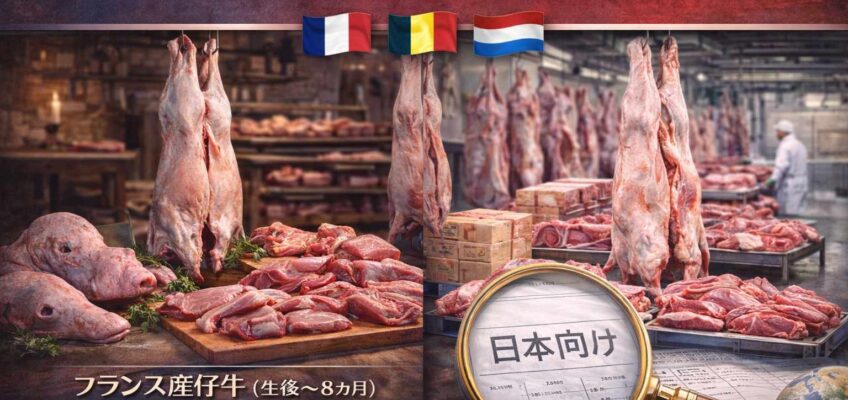
EU Veal Export to Japan European French Terroir & Dutch Precision
Veal in Europe is not a single product. It is a reflection of region, tradition, and method—shaped by how the animal is raised, how it is fed, and how it is ultimately broken down by skilled butchers.
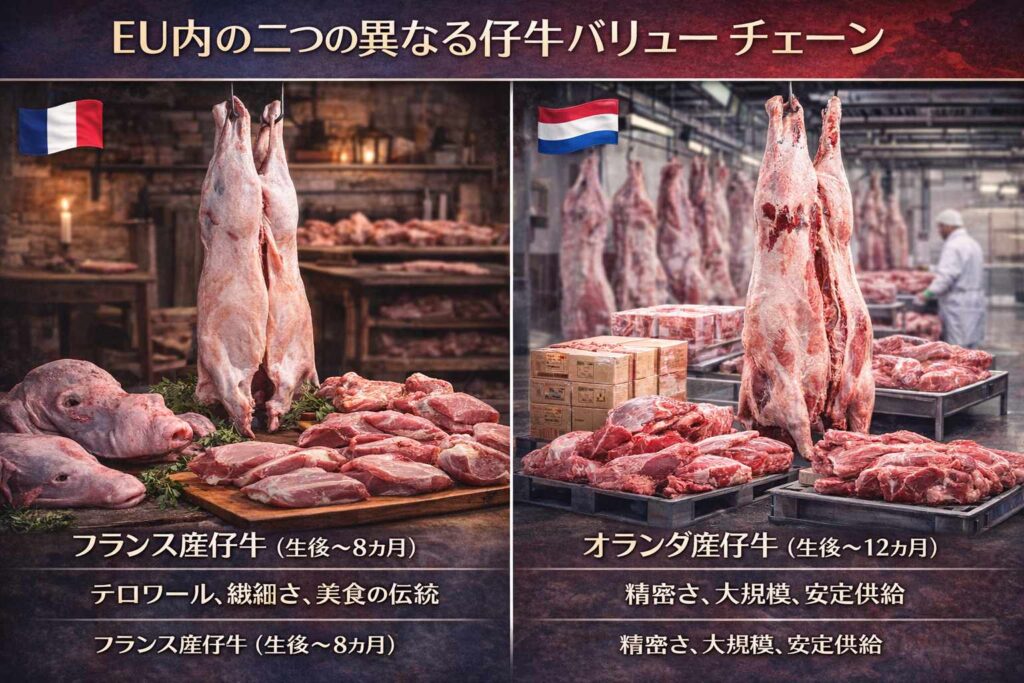 BeeBridge provides structured access to two distinct veal systems within the European Union:
- French veal (~8 months) – defined by terroir, finesse, and culinary tradition
- Dutch veal (~12 months) – defined by precision, scale, and consistency
For Japanese importers, this distinction is not theoretical.
It directly impacts cut size, texture, yield, and end-use application.
French Veal – Terroir, Technique, and Butchery
French veal is shaped by a long-standing culinary philosophy:
the animal is respected in its entirety, and each cut has purpose.
Animals are typically processed at around 8 months, resulting in:
- Finer muscle grain
- Lighter color
- More delicate connective tissue
- Smaller, more uniform organs
This is particularly relevant for:
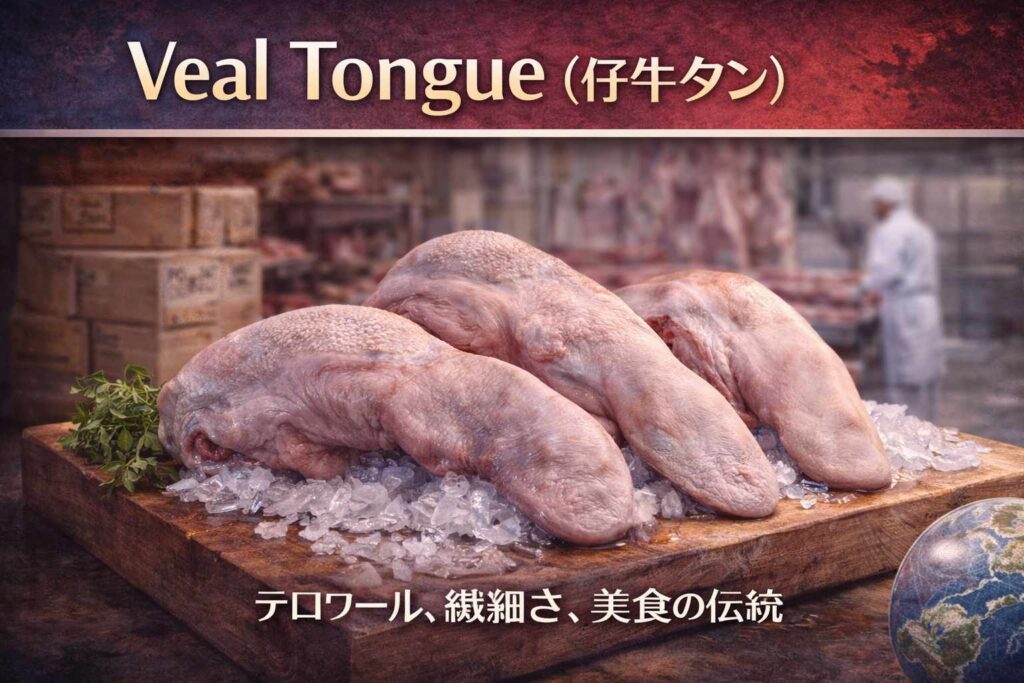 Veal Tongue (仔牛タン)
French veal tongues are smaller, more refined, and require less trimming.
They are suited for:
- Controlled portioning
- High-end plating
- Dishes where texture must remain soft and consistent
Veal Head / Head Meat (仔牛頭肉)
In France, the head is not a byproduct—it is a centerpiece of traditional cuisine.
- High collagen content
- Gelatin-rich texture after slow cooking
- Suitable for both classical European dishes and Japanese reinterpretation
Butchery Approach
French slaughterhouses and partner butchers operate with:
- Manual refinement of cuts
- Attention to anatomical structure
- Separation based on culinary use, not just yield
-
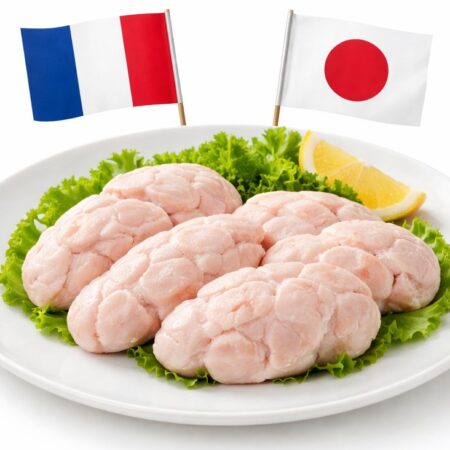
Veal Sweetbreads (France, 8 Month Calf)
€22 Add to cart -
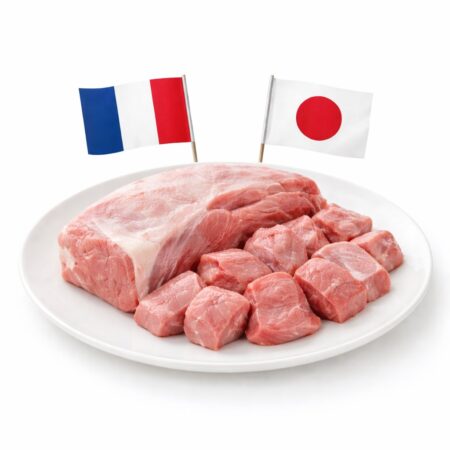
Veal Shoulder (France, 8 Month Calf, Processing Cut)
€22 Add to cart -
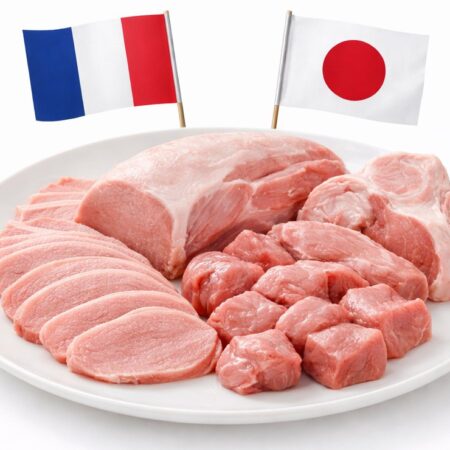
Custom French Veal Cutting — France (8 Month Calf Production)
€22 Add to cart -
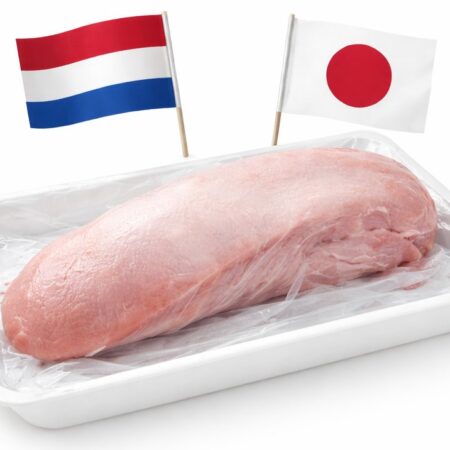
🥩 Veal Tongue — Whole (Netherlands, 12 Month Calf, Bulk Supply)
€15 Add to cart -
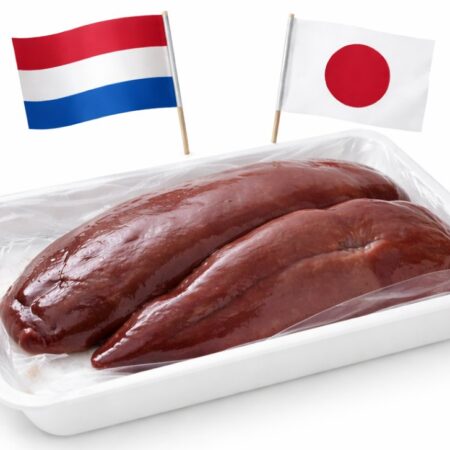
Veal Liver (Netherlands, 12 Month Calf)
€15 Add to cart -
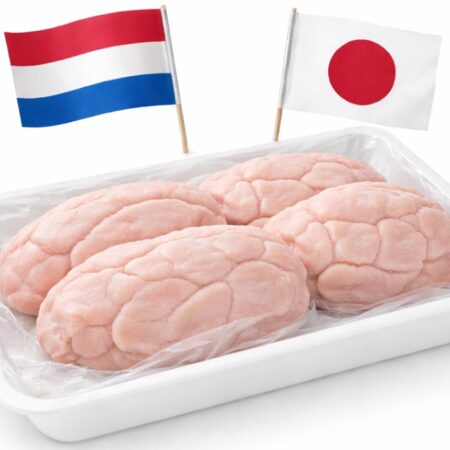
Veal Sweetbreads (Netherlands, 12 Month Calf)
€15 Add to cart -
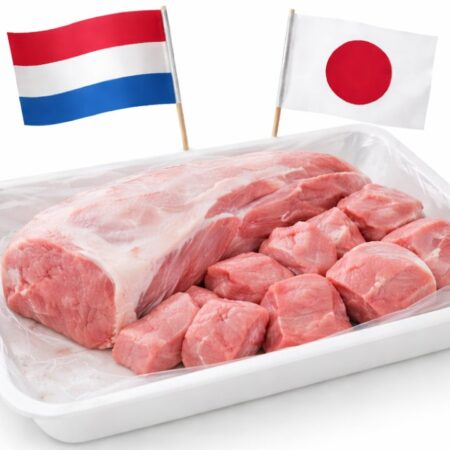
Veal Shoulder (Netherlands, 12 Month Calf, Processing Cut)
€15 Add to cart -
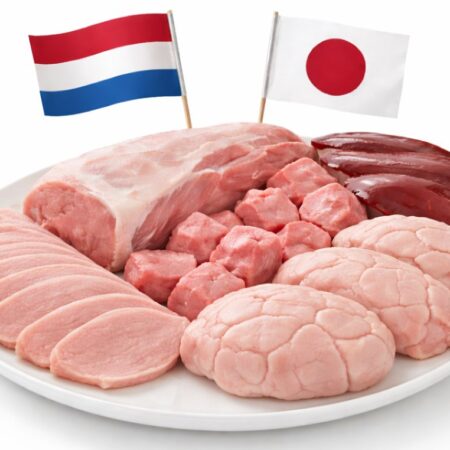
Custom Veal Cuts — Netherlands (Volume Production)
€15 Add to cart

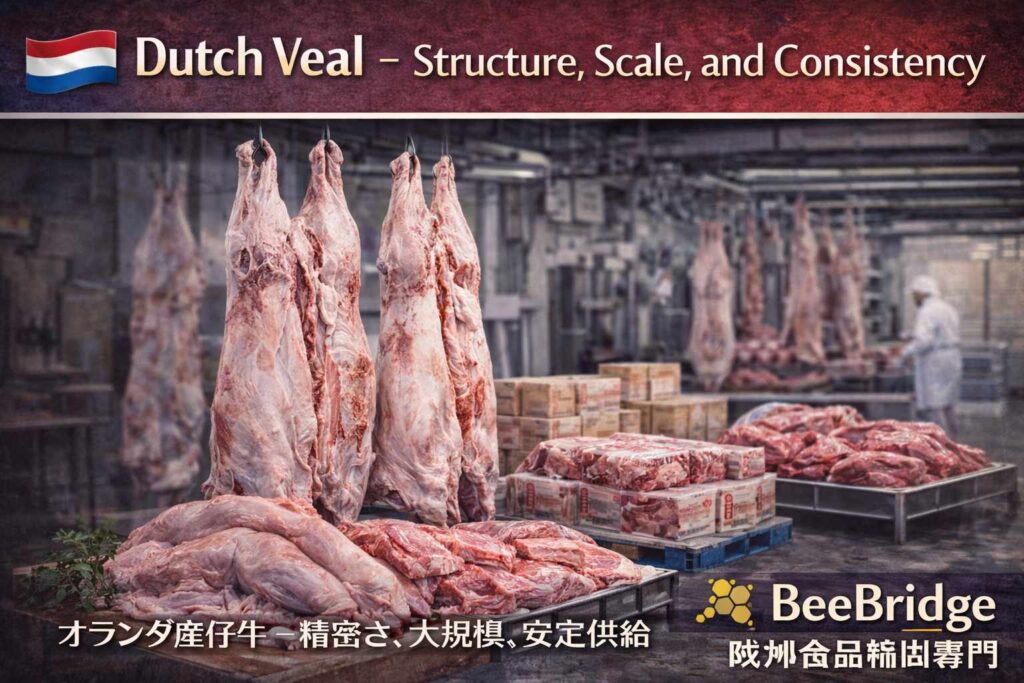 Dutch Veal – Structure, Scale, and Consistency
Dutch veal follows a different philosophy.
It is engineered for uniformity, predictability, and volume supply.
Animals are typically processed at around 12 months, producing:
- Larger tongues
- Heavier cuts
- More standardized carcass breakdown
This system is designed for:
- Industrial processing
- Large-scale distribution
- Buyers requiring consistent sizing across shipments
Veal Tongue (仔牛タン)
Dutch tongues are:
- Larger in size
- More uniform in weight
- Suitable for slicing, processing, or further industrial preparation
Pricing reflects this structure:
- Approx. €11/kg for large-volume programs
- Requires commitment to full container or equivalent scale
Choosing Between the Two Systems
For Japanese importers, the decision is practical:
French Veal
- Smaller units
- Higher perceived value
- Suitable for premium channels
- Lower trimming loss on delicate cuts
Dutch Veal
- Larger volumes
- Lower cost per kg
- Suitable for processing or wholesale
- High consistency across shipments
Both systems operate under the same regulatory framework, but the end result is fundamentally different.
Full Carcass Utilization – A European Advantage
One of the defining strengths of EU veal production is the ability to supply the entire animal with purpose.
BeeBridge structures supply beyond primary cuts:
- Tongue
- Head and head meat
- Liver, heart, kidneys
- Shoulder, loin, and leg cuts
This allows importers to:
- Build multi-product programs
- Reduce dependency on a single SKU
- Improve overall margin through balanced utilization
In European practice, offal is not secondary—it is integrated into the value of the animal.
Fresh and Frozen Logistics
Veal can be supplied in both chilled and frozen formats, depending on the intended use.
Fresh (Chilled – Air Freight)
- Short transit time
- Preserves natural texture and moisture
- Preferred for:
- French veal
- Premium applications
- Immediate processing or foodservice
Frozen (Sea Freight – Reefer)
- Stable, scalable supply
- Lower transport cost per kg
- Preferred for:
- Dutch veal
- Volume programs
- Distribution and processing
Both formats are handled under strict cold chain conditions, with full documentation.
Shipment Structure
Mixed Containers
For importers entering the category, mixed containers allow:
- Combination of:
- Tongue
- Head meat
- Standard cuts
- Reduced risk exposure
- Ability to test multiple product lines simultaneously
This is often the most efficient way to validate demand in the Japanese market.
Full Containers
For established buyers:
- Dedicated 20’ or 40’ reefer containers
- Optimized pricing
- Stable, repeatable supply
This is typically required for Dutch volume programs.
Compliance with Japanese Import Requirements
All veal supplied through BeeBridge is sourced from establishments approved by
👉 Ministry of Health, Labour and Welfare (MHLW)
This ensures alignment with:
- Japanese sanitary and veterinary standards
- BSE-related import conditions
- Full traceability from slaughter to export
Documentation includes:
- Health certificates issued by EU authorities
- Export declarations
- Product traceability records
HS Classification (Reference)
- 0201 / 0202 – Veal meat (chilled / frozen)
- 0206 – Edible offal (including tongue and head meat)
Final classification depends on:
- Cut type
- Processing level
- Packaging format
European Expertise – From Animal to Cut
What defines EU veal is not only the animal, but the system around it.
- Controlled feeding programs
- Regulated slaughter conditions
- Skilled butchery traditions
- Integration of culinary knowledge into processing
In France, this manifests as refinement and culinary alignment.
In the Netherlands, it becomes precision and industrial reliability.
For the importer, the advantage is access to both.
Practical Application for Japan
Veal remains an underutilized category in Japan relative to its potential.
It offers:
- Distinct texture compared to beef
- Versatility across Western and adapted Japanese cuisine
- Strong positioning in both premium and processed segments
Products such as:
- Veal tongue
- Head meat
- Prepared dishes (via EU processors)
can be positioned across:
- Foodservice
- Retail
- Prepared meal production
EU veal is not a single offering.
It is a structured supply system with two complementary strengths:
- France – terroir, finesse, and culinary alignment
- Netherlands – scale, consistency, and pricing efficiency
BeeBridge provides access to both, with export structure aligned to Japanese requirements.
The objective is not simply to supply meat, but to enable importers to build sustainable, multi-product veal programs based on their market.