
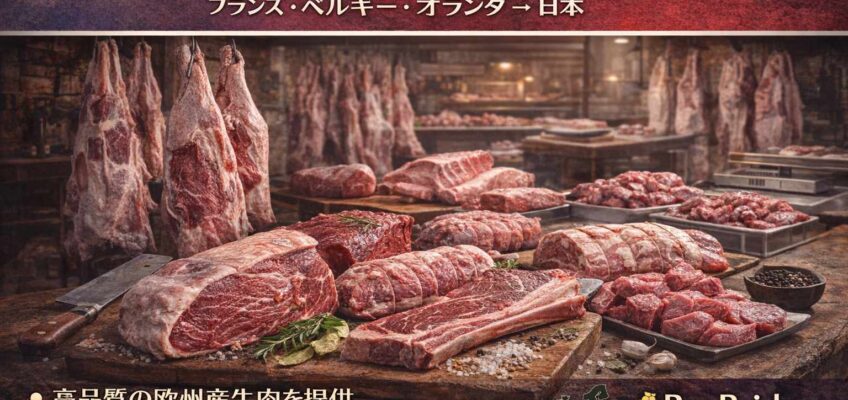
EU Beef Export to Japan from France & Netherlands MHLW Approved Slaughterhouses
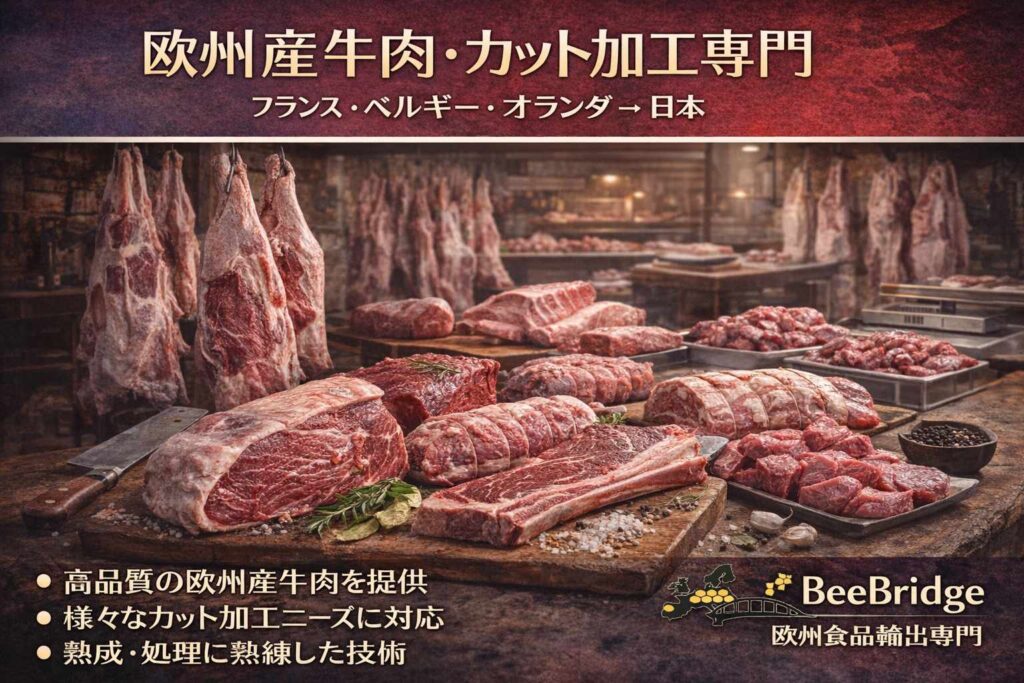 Where European Craft Meets Japanese Market Reality
Japan is one of the most demanding beef import markets in the world — not because of price, but because of structure, expectations, and control.
- Japan imports roughly 850,000 tons of beef annually
- Over 90% of supply is dominated by Australia and the United States
- EU beef represents only a fraction of a percent of imports
This is not a weakness.
This is the opportunity.
EU beef is not competing on volume — it is entering Japan where:
- precision matters
- story matters
- cut integrity matters
BeeBridge operates inside that gap.
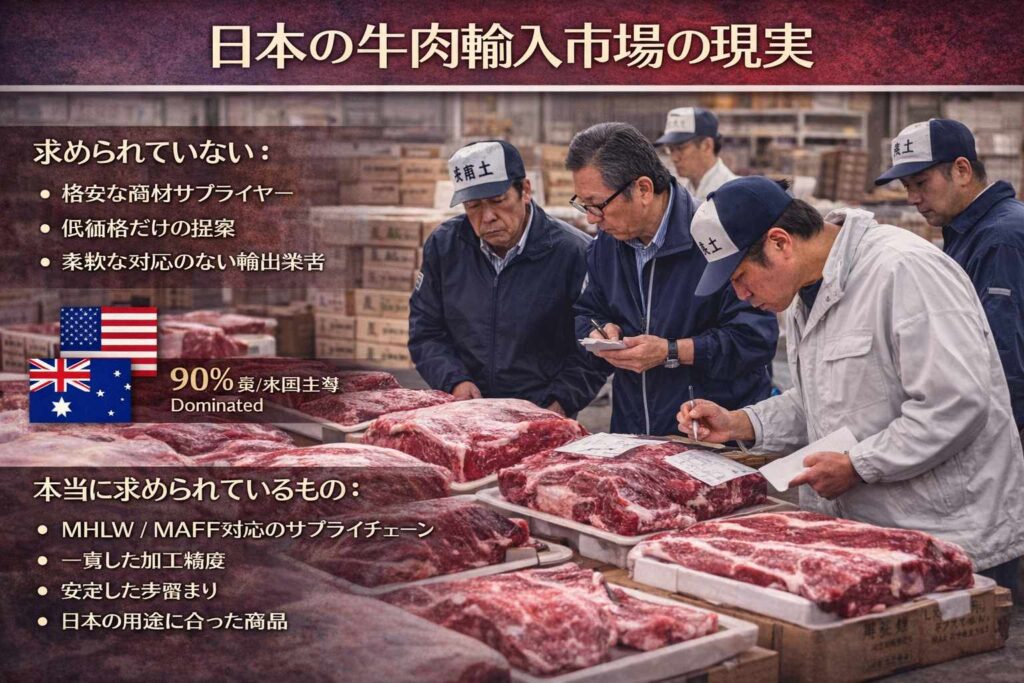 The Reality of the Japanese Beef Market
Japanese importers already understand beef.
They do not need:
- another commodity supplier
- another low-cost offer
- another “we can supply anything” exporter
What they need is:
- compliant supply chains (MHLW / MAFF)
- consistent cutting standards
- predictable yields
- products that fit Japanese usage — not European assumptions
France — Savoir-Faire, Breed Identity, and Cut Intelligence
French beef is not simply “high quality.” It is structured around butchery intelligence.
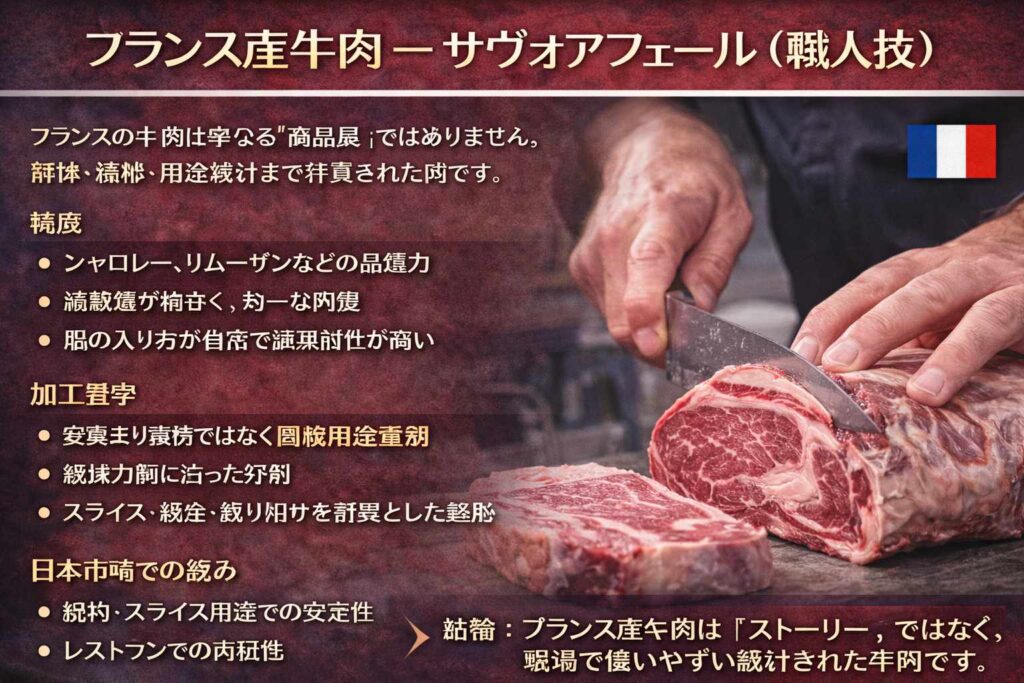
What That Actually Means
French slaughterhouses do not cut for yield alone.
They cut for final application.
- Muscles are separated along natural grain
- Fat is left where it protects texture
- Cuts are shaped for cooking, not just packing
This matters in Japan, where:
- slicing precision is critical
- presentation affects price
- texture defines repeat orders
-
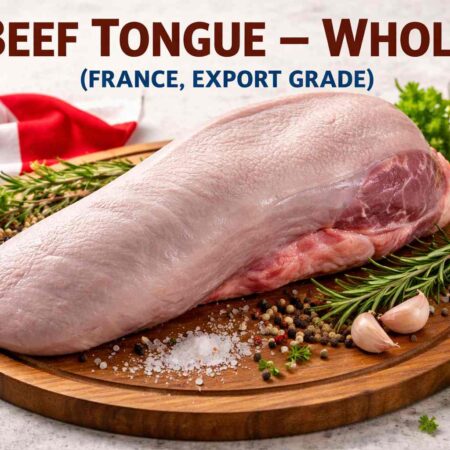
Beef Tongue — Whole (France, Export Grade)
€15 Add to cart -
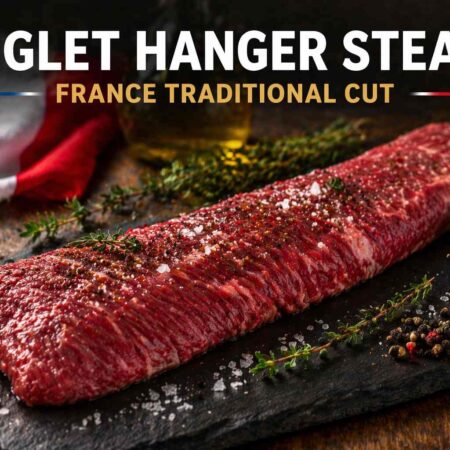
🔥 Onglet Hanger Steak — France Traditional Cut
€22 Add to cart -
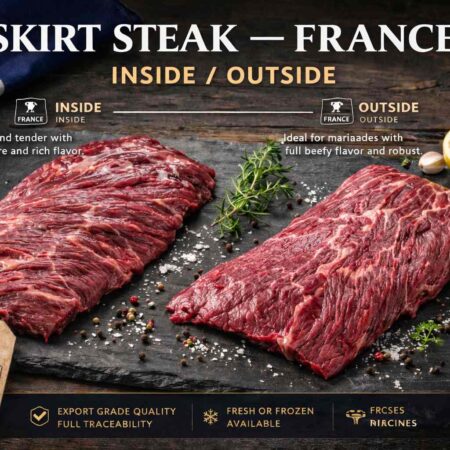
⚡ Skirt Steak — France Inside / Outside
€22 Add to cart -
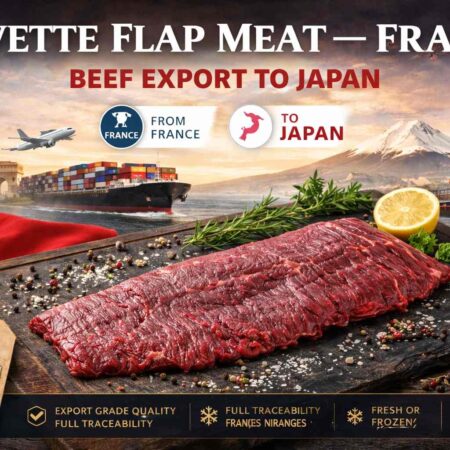
Bavette Flap Meat — France Beef Export to Japan
€22 Add to cart -
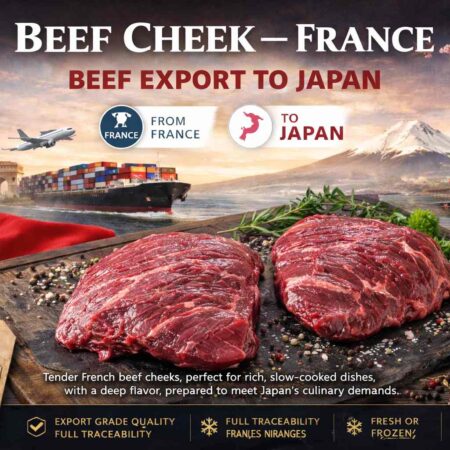
Beef Cheek — France Beef Export to Japan
€22 Add to cart -
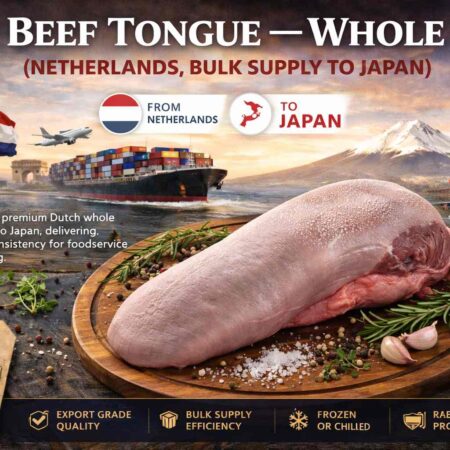
Beef Tongue — Whole (Netherlands, Bulk Supply to Japan)
€15 Add to cart -
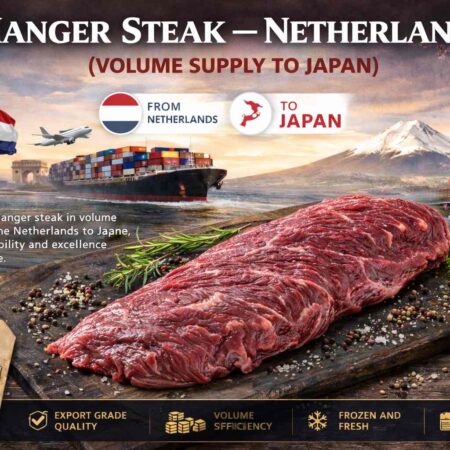
Hanger Steak — Netherlands (Volume Supply to Japan)
€15 Add to cart -
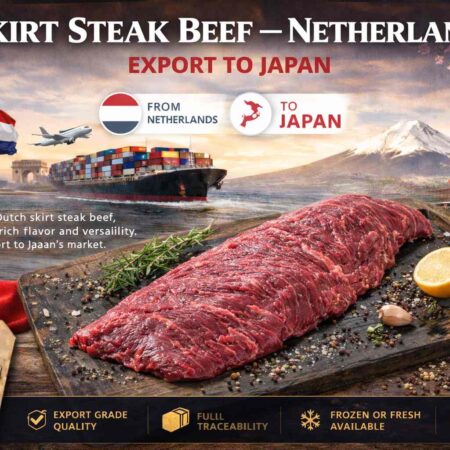
Premium Frozen Dutch Skirt Steak for Foodservice & Prepared Foods | NetherlandsNetherlands Export to Japan
€15 Add to cart -
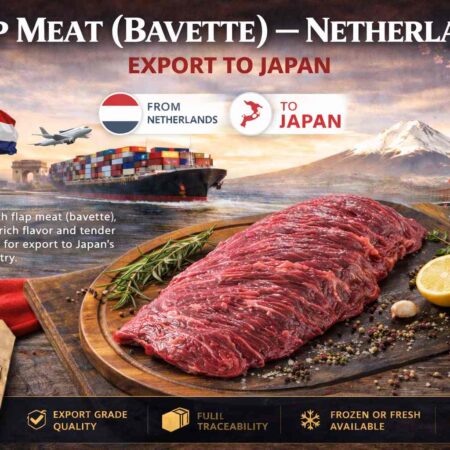
Premium Frozen Dutch Beef Flap (Bavette) for Foodservice & Processing | Netherlands
€15 Add to cart -
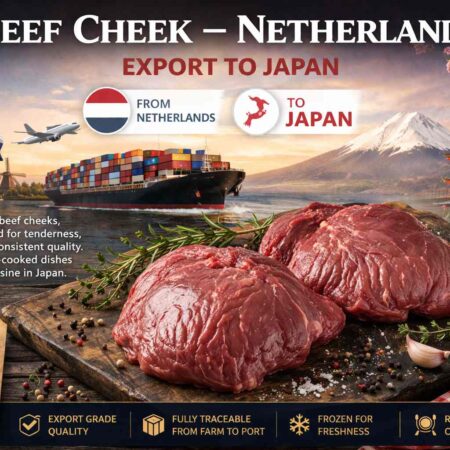
Premium Frozen Dutch Beef Cheek for Foodservice and Prepared Dishes | Netherlands Export to Japan
€15 Add to cart

Breed Impact — Not Marketing, Real Output
French breeds such as:
- Charolais
- Limousin
produce:
- tighter muscle structure
- more controlled fat distribution
- consistent color
This directly impacts:
- slicing yield
- cooking behavior
- plate consistency
Where French Beef Wins in Japan
French beef performs strongest in:
- restaurant channels
- specialty butchers
- premium retail
Not because it is “luxury” —
but because it behaves predictably under skilled handling.
Netherlands — Industrial Precision Without Compromise
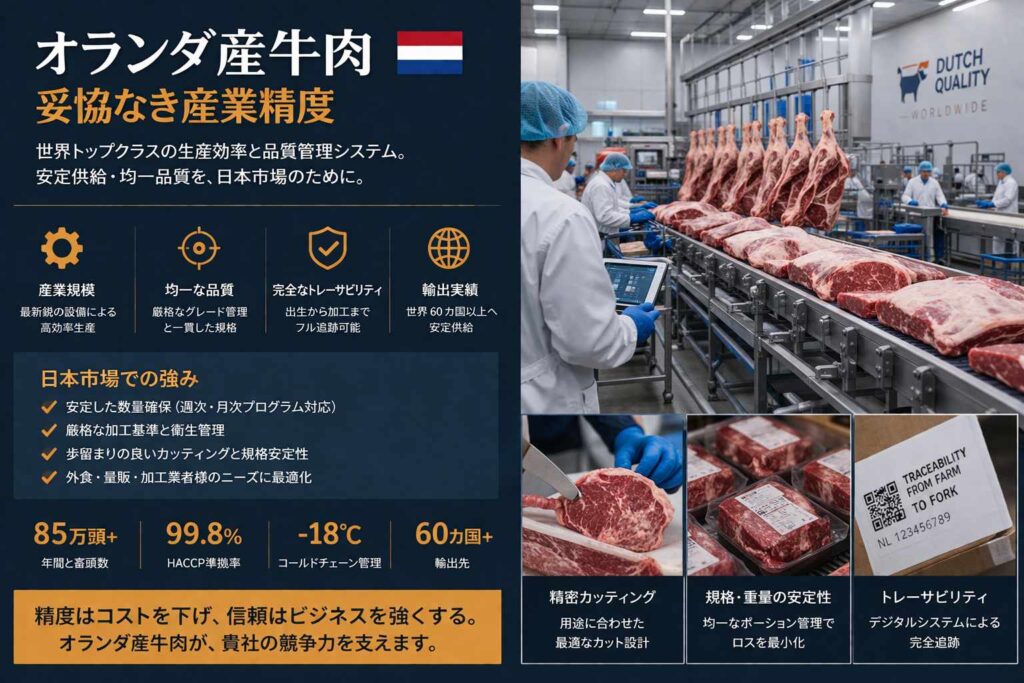 Where France refines, the Netherlands stabilizes.
Dutch beef is built for:
- uniform carcass breakdown
- repeatable sizing
- high-throughput processing
What Dutch Systems Do Better
- Standardized cut weights across shipments
- Consistent fat ratios
- High traceability accuracy
- Reliable weekly or monthly volume
This is not “lower quality.”
This is controlled quality at scale.
Where Dutch Beef Wins in Japan
- distributors
- foodservice chains
- processing operations
Anywhere consistency matters more than narrative.
The Strategic Play — Combining Both
Most importers choose one system.
That is the mistake.
The strongest position in Japan is:
- French cuts → margin drivers
- Dutch cuts → volume stabilizers
Example structure:
- French ribeye → premium channel
- Dutch chuck / trim → processing / chain supply
This creates:
- balanced margin
- stable cash flow
- reduced inventory risk
Why EU Beef Is Still Underrepresented (And Why That Matters)
Despite quality, EU beef remains marginal in Japan because:
- supply chains are fragmented
- exporters are not Japan-focused
- processing rarely matches Japanese expectations
At the same time:
- Japan continues to rely heavily on imports for supply
- Domestic production covers only part of demand
And importantly:
- frozen imports are rising in foodservice
- chilled imports are tightening due to cost pressure
What This Means
The market is shifting toward:
- controlled cost + reliable supply
- processed-ready inputs
- multi-use cuts
This is exactly where EU supply can compete.
Processing — Where the Real Value Is
Most exporters ship carcasses or primal cuts.
That is not enough for Japan.
BeeBridge structures processing at source to match Japanese needs:
- portion-controlled cuts
- vacuum-packed formats
- fat calibration
- trimming specifications
- export-ready labeling
Why This Is Critical
Without processing alignment:
- yield is inconsistent
- labor costs increase in Japan
- product performance varies
With proper processing:
- kitchens operate faster
- margins improve
- repeat orders stabilize
Less-Than-Container Strategy — The Entry Point Most Suppliers Ignore
The biggest failure point in EU exports is volume rigidity.
BeeBridge solves this with:
Mixed Containers
You can combine:
- French premium cuts
- Dutch volume cuts
- secondary and processing cuts
Why This Works in Japan
It allows importers to:
- test demand without overcommitting
- build product mix gradually
- reduce capital exposure
Example Entry Structure
- French striploin → restaurant channel
- French specialty cuts → niche buyers
- Dutch trim → processing base
Compliance — The Non-Negotiable Layer
Everything is built around:
- MHLW (厚生労働省)
- MAFF (農林水産省)
This includes:
- approved slaughterhouses
- approved processing plants
- veterinary certification
- traceability systems
Why This Matters Operationally
Japan does not forgive mistakes in meat imports.
Failures result in:
- shipment rejection
- loss of trust
- long-term supplier exclusion
BeeBridge removes that risk by operating only within approved pathways.
The Competitive Truth
You are not competing with:
- Australia
- United States
You are competing with:
- consistency expectations
- processing standards
- buyer confidence
Final Positioning
EU beef is not a volume game in Japan.
It is a precision supply game.
- France delivers refinement and culinary alignment
- Netherlands delivers consistency and scale
BeeBridge connects both into a single system designed for:
- Japanese importers
- Japanese processing expectations
- Japanese market realities
What You Actually Gain
Not just beef supply.
But:
- a compliant entry into EU sourcing
- a flexible structure to test and scale
- access to two of Europe’s strongest beef systems
- a supply chain built for Japan — not adapted to it